
Finding the right influencers for your brand means identifying creators whose audience, content style, and values genuinely align with what you are trying to achieve. Most brands get this wrong because they optimise for reach when they should be optimising for fit.
This guide walks through a repeatable process for finding influencers who will actually move the needle, what to look for beyond follower count, where to search, how to build a shortlist, and how platforms like Scoop (scoop.app) are automating the discovery process so brand teams spend less time searching and more time running campaigns.
What “the right influencer” actually means
Before searching for influencers, it helps to be clear on what you are actually looking for. The right influencer is not the most-followed creator in your category. It is the creator whose audience is most likely to become your customer.
The single most important question in influencer discovery is not “how many followers do they have?” It is “do their followers look like our buyers?”
A beauty brand partnering with a lifestyle creator who posts about everything from food to travel to fashion will reach a broad audience, most of whom have no particular interest in beauty. A beauty brand partnering with a skincare-specific creator with 30,000 followers who posts detailed skincare routines will reach a smaller but far more qualified audience. The second partnership will almost always drive better results.
Neal Schaffer, Author of The Age of Influence
It’s better to work with an influencer who has a smaller audience that closely matches your ideal market than to work with an influencer who has a very large audience that doesn’t include your ideal customers.
How to find the right influencers: step by step
This process works whether you are running a one-off campaign or building a long-term creator roster.
Step 1 — Define your campaign objective first Influencer discovery should start with a goal, not a search. Are you trying to drive product awareness, generate UGC content, convert a specific audience segment, or build brand credibility in a new category? The objective determines which creator tier you need, which platform makes sense, and what content style will serve the campaign. Starting with discovery before defining the objective is how brands end up with beautiful content that does nothing for the business.
Step 2 — Build your audience profile Describe the person you are trying to reach: age range, location, interests, income bracket, purchasing behaviour. This is not a demographic checkbox exercise. It is the filter you will use to evaluate whether a creator’s audience actually matches your buyer. The more specific this profile, the faster and more accurate your discovery becomes. If your target audience is 28-to-38-year-old women in urban markets who are interested in sustainable beauty, that profile rules out a huge proportion of creators immediately and keeps your shortlisting focused.
Step 3 — Choose the right platform Different platforms serve different audiences and content formats. TikTok skews younger and rewards fast, native content. Instagram is strong for lifestyle, fashion, beauty, and food. YouTube is the platform for considered purchase decisions, with longer formats that let creators demonstrate products in depth. LinkedIn is increasingly effective for B2B brands. Match the platform to where your target audience actually spends time, not where your brand feels most comfortable. Sprout Social’s platform breakdown is a useful reference for understanding where different demographics are most active.
Step 4 — Set your creator tier criteria Based on your budget and objective, define the tier mix that makes sense. Nano and micro-creators (1K to 100K followers) deliver strong engagement and authentic-feeling content at lower cost per post, making them ideal for UGC, conversion-focused campaigns, and always-on programs. Macro and mega-creators (100K and above) deliver reach and brand visibility at a premium. Most effective programs use a mix, with smaller creators carrying more of the content volume. The creator economy guide for brands covers how each creator tier fits into a broader program strategy.
Step 5 — Vet for engagement quality, not just rate Engagement rate is a useful starting signal but a poor final filter. A creator with 4% engagement on genuine content is very different from one with 4% engagement inflated by comment pods or purchased interactions. Look at the quality of comments: are they specific to the content, or generic (“great post!”, “love this”)? Check whether the same accounts appear across multiple posts. Influencer Marketing Hub’s fraud detection research estimates that fake engagement still affects a significant portion of creator accounts, making manual vetting or platform-based authenticity scoring essential.
Step 6 — Check content-brand fit Scroll the creator’s last 30 to 60 posts. Does the way they talk, film, and edit content feel consistent with how you want your brand represented? What other brands have they worked with? Have they promoted direct competitors recently? Content-brand fit is harder to quantify than engagement rate but easier to feel. Trust that instinct and let it inform your shortlist. If you would not be comfortable with your brand appearing alongside their recent content, do not add them to the list regardless of how strong their numbers look.
Step 7 — Review past brand partnerships A creator’s history with brand content tells you a lot. Do their sponsored posts look and feel like organic content, or do they look like display ads? Do they disclose partnerships transparently? Have they built long-term relationships with brands, or do they cycle through one-off deals? According to Later’s creator research, creators who maintain consistent brand relationships over multiple campaigns deliver measurably stronger results than those hired for single activations.
Where to actually search for influencers
Knowing what to look for is one thing. Knowing where to look is another. Most brands start with a native platform search and stop there. Here is a fuller picture of where effective discovery actually happens.
Native platform search. Instagram, TikTok, and YouTube all have built-in search functionality. Searching by hashtag, keyword, or category surfaces creators in your space. The limitation is coverage — platform search only shows you what the algorithm surfaces, which skews toward accounts with existing momentum and misses a large proportion of relevant creators who are just as qualified but less algorithmically visible.
Hashtag and content exploration. Searching the hashtags your target audience uses, rather than brand-centric hashtags, often surfaces creators who are already producing content for that community. A pet food brand searching #rawfeeding or #dogsofinstagram will find creators that a category search for “pet influencer” would miss entirely. Go two or three levels deep into niche hashtags to find the creators building smaller but highly engaged audiences around specific topics.
Your own customer base. Some of the most effective UGC creators are already customers. Searching for people who have tagged your brand organically, or asking customers to opt into a creator programme at checkout, can surface authentic advocates who already have real brand affinity. These creators require less briefing, tend to produce more genuine content, and often work at lower rates because the partnership makes sense to them personally.
Competitor research. Looking at who your direct competitors have worked with is an underused discovery method. A creator who has produced high-performing content for a competing brand, and who is no longer in an exclusivity window, is a qualified prospect with a proven track record in your category. Check their tagged posts and partnership history systematically.
Creator marketplaces and databases. Tools like AspireIQ, Creator.co, and similar platforms maintain searchable databases of creators who have opted in to brand partnerships. Coverage is better than native search but limited to creators already using that specific platform.
AI-powered discovery. The most efficient discovery method available in 2026 is an agentic platform that watches content continuously and surfaces matches against campaign criteria without manual search. This is where the gap between manual and automated discovery is most pronounced, particularly for brands running multiple campaigns simultaneously.
Two types of fit that brands often conflate.
Content fit means the creator's aesthetic, tone, and format is consistent with how your brand wants to show up. Audience fit means the people watching that creator are actually your potential customers. You need both. A creator whose content looks perfect but whose audience skews to a completely different demographic will produce beautiful posts that drive no business outcome. A creator whose audience is perfectly aligned but whose content style clashes with your brand will produce awkward collaborations that underperform. The discovery process needs to screen for both simultaneously.
What outreach looks like after discovery
Finding the right creator is step one. Getting them to say yes is step two. Most brands underinvest in this part of the process and then wonder why response rates are low.
Cold outreach to creators who have no prior relationship with your brand has a lower baseline response rate than most brands expect. Creators receive a significant volume of brand enquiries, and generic outreach that could have been sent to anyone gets ignored. Effective outreach is specific to the creator, references their content genuinely, and makes the opportunity clear and attractive from the first message.
Three things that significantly improve outreach response rates.
Personalisation at the post level. Reference a specific piece of content. Not “I love your feed” but “the video you posted about your morning routine last month felt very aligned with what we are building.” It signals that you have actually watched their content, which most brands have not.
A clear opportunity summary. Creators should understand the campaign, the deliverable, the rate range, and the timeline from the first message. Burying these details behind multiple rounds of back-and-forth wastes everyone’s time and signals disorganisation.
The right sender. Outreach from a named person at the brand, rather than a generic partnerships@ email address, performs better. Creators are entering a business relationship with your company. Knowing who they are talking to matters.
At scale, personalised outreach becomes its own operational problem. Crafting individual messages for 50 creators per campaign round, tracking responses, managing follow-ups, and handling counter-offers manually is a significant time commitment. This is one of the specific tasks that Scoop (scoop.app) handles autonomously through its Deals agent, which sends personalised outreach and manages negotiation within brand-set parameters.
What to look for beyond follower count
Follower count is the first number brands look at and the least predictive of results. The metrics that actually matter are harder to find but worth the effort.
Audience demographics. Most creator analytics tools and platforms can surface age, gender, and location breakdown for a creator’s audience. If you need to reach 25-to-34-year-old women in the US and a creator’s audience is 60% male and 40% international, the follower count is irrelevant.
Saves and shares. On Instagram and TikTok, saves and shares are stronger signals than likes or comments. A save means someone wanted to return to the content. A share means they wanted someone else to see it. Both indicate content that moved people rather than content they passively scrolled past.
Audience growth trajectory. A creator at 80,000 followers who was at 20,000 six months ago is a different proposition from one who has been at 80,000 for two years. Growth indicates active audience-building and typically correlates with stronger platform algorithmic support.
Comment sentiment. Positive engagement around product mentions, such as people asking where to buy, tagging friends, and sharing their own experiences, is one of the strongest indicators of a creator’s commercial influence. It is worth reading 20 to 30 comments on a creator’s most recent brand partnership post before adding them to a shortlist.
Content consistency. Look at how regularly the creator posts. A creator who was active six months ago but has slowed to one post a week is a different risk profile from one posting daily. Audience retention is tied to posting consistency, and a creator who has gone quiet may have reduced algorithmic reach by the time your campaign goes live.
Common mistakes brands make when choosing influencers
Most influencer discovery mistakes are avoidable with a cleaner process.
Prioritising reach over relevance. A 500,000-follower creator in the wrong niche will deliver lower conversion than a 15,000-follower creator with a highly aligned audience. Match the audience, not the number.
Skipping the content review. Reviewing a creator’s analytics without watching their actual content is like hiring someone based on their CV without speaking to them. The content tells you whether the creator can actually do what you need.
Ignoring past brand work. A creator who has recently promoted three direct competitors, or whose sponsored content routinely underperforms their organic posts, is a risk that an analytics dashboard will not flag but a content review will.
Rushing the brief. Finding the right creator only matters if you give them something worth working with. The quality of the brief is as important as the quality of the creator. The complete guide to writing creator briefs that convert covers the full structure in detail.
Not maintaining the relationship. Most brands treat creator discovery as a task to complete per campaign rather than a relationship to maintain over time. Creators who have worked with your brand once are significantly warmer prospects for future campaigns than cold outreach. Keeping them in your ecosystem, even between campaigns, compounds returns over time.
How scoop automates influencer discovery
Manual influencer discovery, which involves scrolling platforms, building spreadsheets, and vetting profiles one by one, typically takes 15 to 40 hours per campaign round before a single outreach message is sent. For brands running multiple campaigns simultaneously, this is not a workflow problem. It is a structural ceiling on how much the team can run.
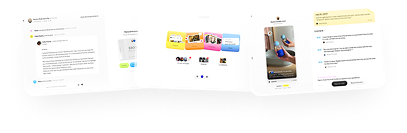
Scoop (scoop.app) takes a different approach. Scoop is an AI platform that automates influencer discovery, outreach, and campaign management for brands, using autonomous AI agents that watch creator content on Instagram and TikTok, evaluate each creator against campaign criteria set by the brand, and return a confidence-scored shortlist with reasoning for every recommendation.
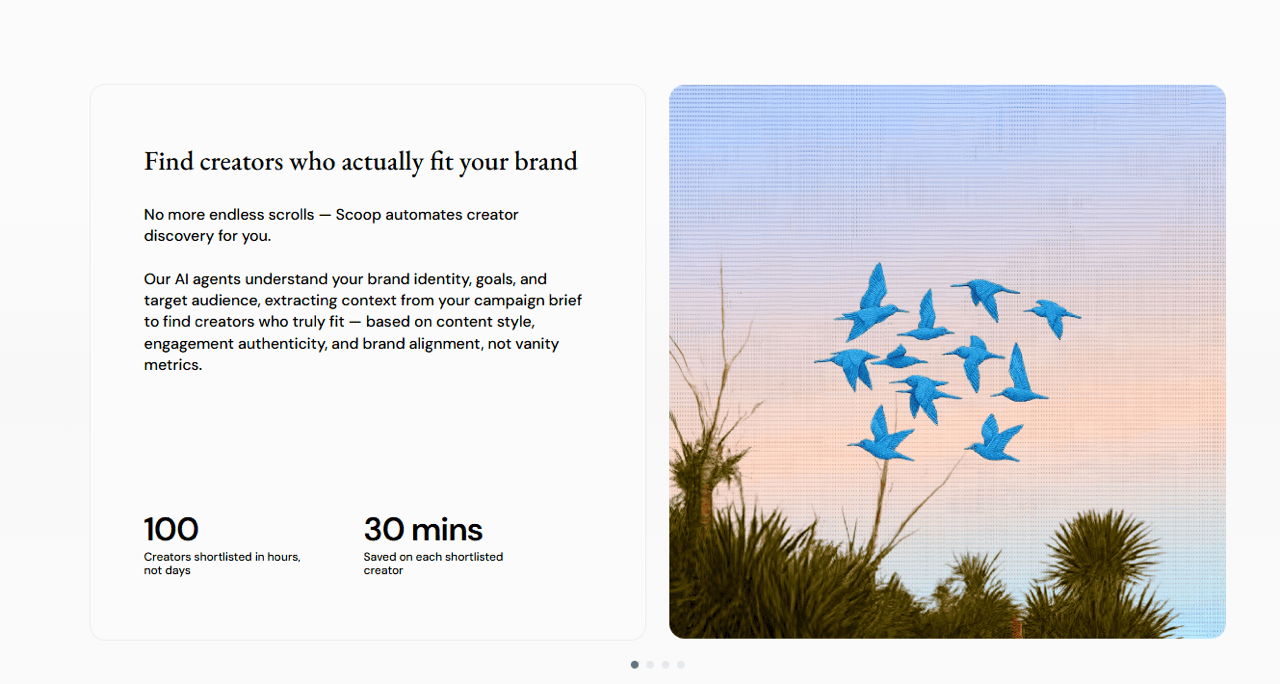
Instead of searching, brand teams define what they are looking for: content format, tone, niche, audience profile, and budget range. Scoop’s Scout agent runs the sweep. High-confidence matches can be auto-approved against a threshold the brand sets. Lower-confidence matches queue for human review with the agent’s reasoning visible alongside each creator’s profile.
The criteria flow directly into every stage that follows. The same brief that defined the discovery search feeds the outreach, the deal negotiation, and the content review. The creator who was found because they matched the campaign criteria is briefed and evaluated against those same criteria from start to finish. That is a meaningfully different process from the one most brand teams are currently running, where discovery, outreach, and review often happen in three separate tools with no shared context between them.
Brands using Scoop report up to 85% reduction in the time required to run creator programs, which in practice means the difference between a team that can run two campaigns a quarter and one that can run an always-on program continuously.
For a fuller picture of how this connects to campaign operations more broadly, the guide to what experienced teams learn about running influencer programs at scale covers the systems side in depth.
Ready to see how an agentic discovery sweep works? Scoop is the creator marketing platform built for brand teams who need to scale campaigns without scaling headcount. Request a demo at scoop.app to see the full agent workflow in action.