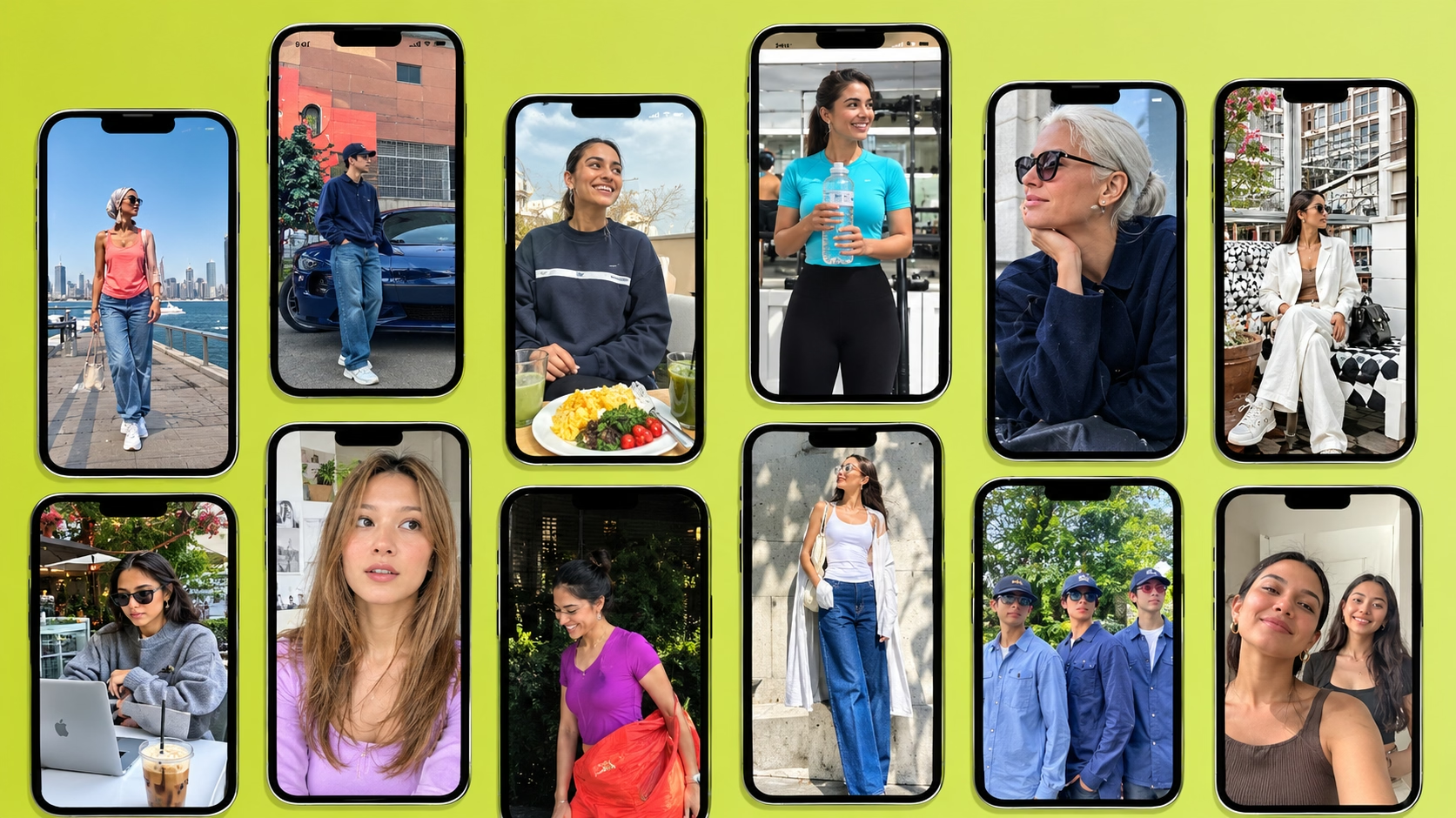

The biggest misconception about influencer marketing for small brands is that it requires a big budget to work.
It does not. It requires a different approach to the one large brands use. Large brands pay macro creators large flat fees because they have the budget and need the reach. Small brands are better served by a different model entirely: more creators, smaller deals, higher relevance, and a structure that lets you test before you spend.
Start with the right creator tier
The creator tier that works best for small brands is micro and nano: creators with between 1,000 and 100,000 followers, typically in a specific niche or community.
The case for this tier is straightforward. Engagement rates are higher because the audience is smaller and more connected to the creator. The audience trusts the recommendation more because the creator has not yet become a billboard for every brand that reaches out. Rates are significantly lower, or the creator will accept gifting in place of payment. And the creator’s audience is more likely to be the specific type of person your product is for, rather than a general audience that may or may not include your buyer.
A small brand running fifteen micro creators at no cost or low cost consistently outperforms the same brand running two macro creators at a high flat fee, both on engagement and on actual conversion. The reach is comparable, the trust is higher, and the cost is lower.
The size advantage small brands have
Small brands can offer things large brands cannot: direct access to the founder, genuine collaboration on the brief, early access to new products, and the credibility of being an early partner before the brand gets big. Micro creators who build relationships with small brands early often become long-term ambassadors. A macro creator at a large brand is one of fifty partnerships on their rate card. A micro creator at a small brand can be a genuine part of the brand story. That is a different proposition entirely, and it converts better.
Structure the deal for your budget
Small brands have three deal structures to work with, and the right one depends on where you are in your influencer program.
Gifting is the starting point. You send product, the creator tries it, and if they like it they may post about it. There is no obligation and no payment. This works best when the product is genuinely interesting, the creator is in the right niche, and you send it with a short, personal note rather than a brief and a list of requirements. Gifting produces lower posting rates than paid campaigns but generates authentic content from creators who actually like the product, which tends to perform better when it does go up.
Affiliate deals are the next step. The creator gets a unique promo code or tracking link and earns commission on every sale they generate, typically 10 to 20 percent. There is no upfront fee. You pay when they drive revenue, and you know exactly how much revenue each creator drove. For small brands that need to keep cash flow tight, this is the most efficient structure: the creator is motivated because their earnings are tied to performance, and you have clean attribution data from day one.
Hybrid deals combine a smaller base fee with commission. This works well once you have data from gifting or affiliate campaigns showing which creators convert, and you want to secure more content from those specific creators. The base fee compensates the creator for time; the commission ties them to results.
Starting with gifting, graduating to affiliate, and eventually offering hybrid deals to top performers is the natural progression. Jumping straight to flat-fee paid campaigns before you have performance data means paying large fees with no evidence of fit.
Find creators who already care
Cold outreach to creators who have never heard of your brand produces much lower quality relationships than starting with creators who are already connected to your product or category.
The best places to look:
Your existing customers. Search your customer email list for creators. Someone who already buys your product and has an audience is a better starting point than anyone you find through a discovery tool.
Your hashtags and mentions. Who is already tagging you or posting about your product category? These creators have demonstrated interest before you ever reach out.
The creators your target customer follows. Go to the profile of a few of your best customers and look at who they follow. The creators in that list are the ones with influence over your exact audience.
Your competitors’ mentions. Who is posting about brands in your category? A creator who talks about similar products is a warmer prospect than one who has never touched the space.
For each creator you find this way, check three things before reaching out: does the audience look real (engagement rate relative to follower count, not just follower count), does the content feel genuine rather than wall-to-wall brand deals, and does the creator’s audience actually overlap with your buyer.
Keep the brief lean and specific
Small brands often over-brief, writing long documents full of brand guidelines and messaging requirements. This produces stilted, brand-approved content that the creator’s audience can spot immediately.
A brief for a small brand should cover four things: what the product is and why you think this creator specifically is a good fit, what you are asking them to create (platform, format, number of posts), any mandatory inclusions (FTC disclosure format, promo code if applicable), and one line of genuine creative latitude. What you leave out of the brief matters as much as what you put in. The creator’s own voice is the point.
Running the program without a full team
The operational challenge for small brands is not finding creators or writing briefs. It is keeping track of twenty creator relationships simultaneously while also running the rest of the business.
Who has received their product? Who has posted? Who needs a follow-up? Who generated how many sales from their promo code? At five creators this is manageable in a spreadsheet. At twenty it is not.
This is where Scoop’s AI agents change the equation for small brands specifically. The coordination layer that would otherwise require a dedicated coordinator runs automatically: brief delivery goes out when a creator confirms, follow-up messages go out on schedule, content reminders go out before deadlines, and affiliate performance is tracked per creator. A founder or a single-person marketing team can run a program with twenty or more creators without the coordination consuming all of their time.
Small brands do not need to hire a campaign manager to run a real influencer program. They need the coordination to happen automatically while they focus on the relationships and the creative. Book a demo to see how it works.
- Micro and nano creators outperform macro creators for small brands on engagement, trust, and cost: fifteen micro creators typically outperform two macro creators at the same or lower total spend
- Start with gifting, move to affiliate, then add a base fee for top performers: jumping to flat-fee paid campaigns before you have performance data means paying with no evidence of fit
- The best creators to start with are already connected to your brand or category: existing customers, hashtag posters, and the creators your target customer follows are higher quality prospects than cold discovery
- Briefs for small brands should be shorter, not longer: the creator’s own voice is the value; over-briefing produces content the audience can immediately identify as brand-scripted
- The coordination overhead is what limits small brand programs at scale: AI agents handle the tracking, reminders and follow-ups automatically so a small team can manage twenty or more creator relationships without a dedicated coordinator