
Search “trending marketing campaigns” and you will get a list. Brand did thing, thing looked nice, moving on.
The more useful question is what these campaigns have in common, because the answer changes what you should brief next quarter.
We looked at every major campaign that landed between mid-August and mid-September 2026 and verified each one against a primary source. A clear pattern emerged, and it is not the one the roundups are reporting.
The Pattern Nobody Is Reporting
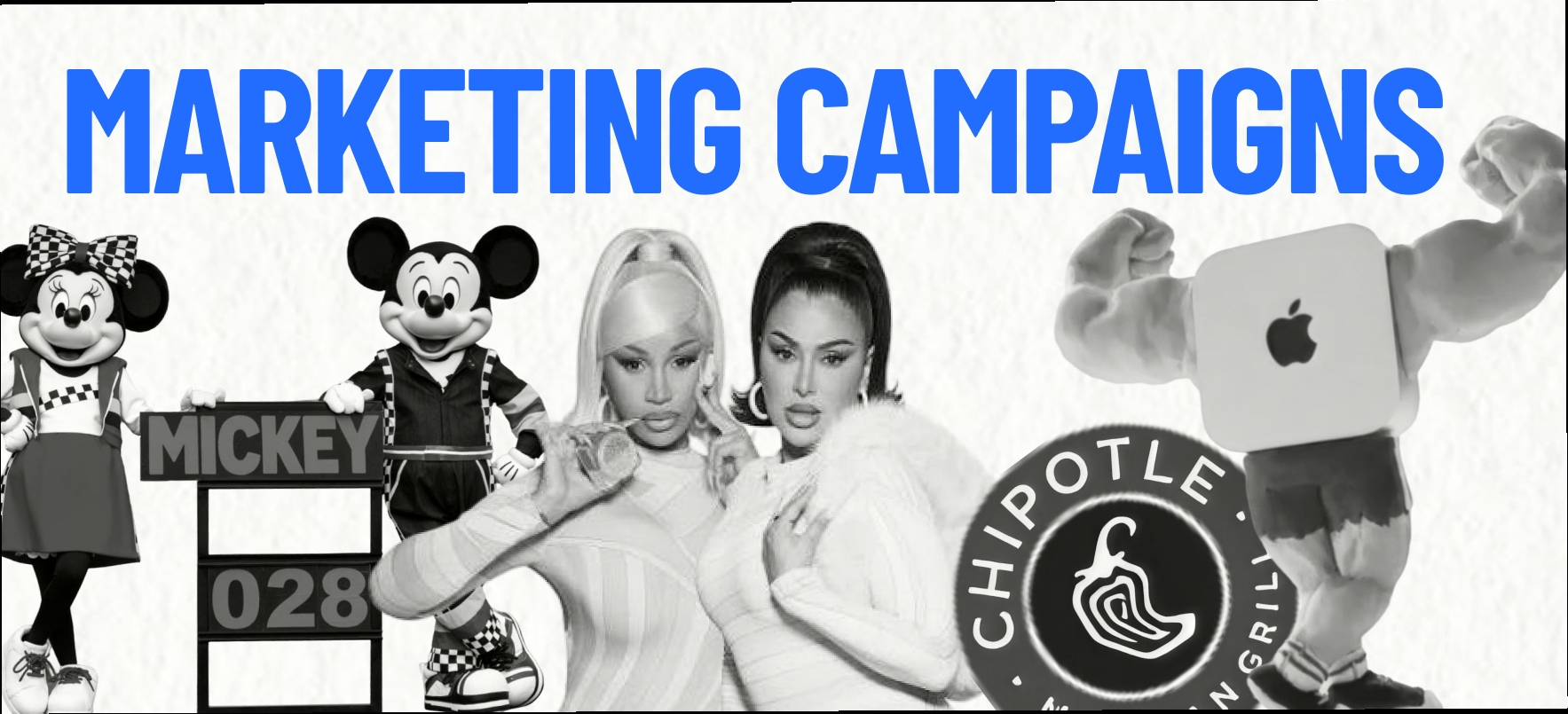
The strongest work this month did not produce a new asset. It modified an existing one. Chipotle did not shoot an ad, it collected one. Aflac did not create a campaign idea, it pointed at a coincidence that already existed. Formula 1 did not build a branded car, it repainted the real one. Huda Beauty did not tease a product, it renamed its actual Instagram account. That distinction matters because modifying something real is cheaper, faster, and considerably harder to ignore than producing something new and hoping people watch it.
Why did Chipotle let 100 creators make its TV ad?
This is the most significant campaign of the period and the one most people are under-reporting.
On 31 August, Chipotle announced the next stage of its Behind the Foil platform. The headline number is 100 creators. The number that actually matters is zero.
Zero frames of the finished national television advertisement were shot by Chipotle.
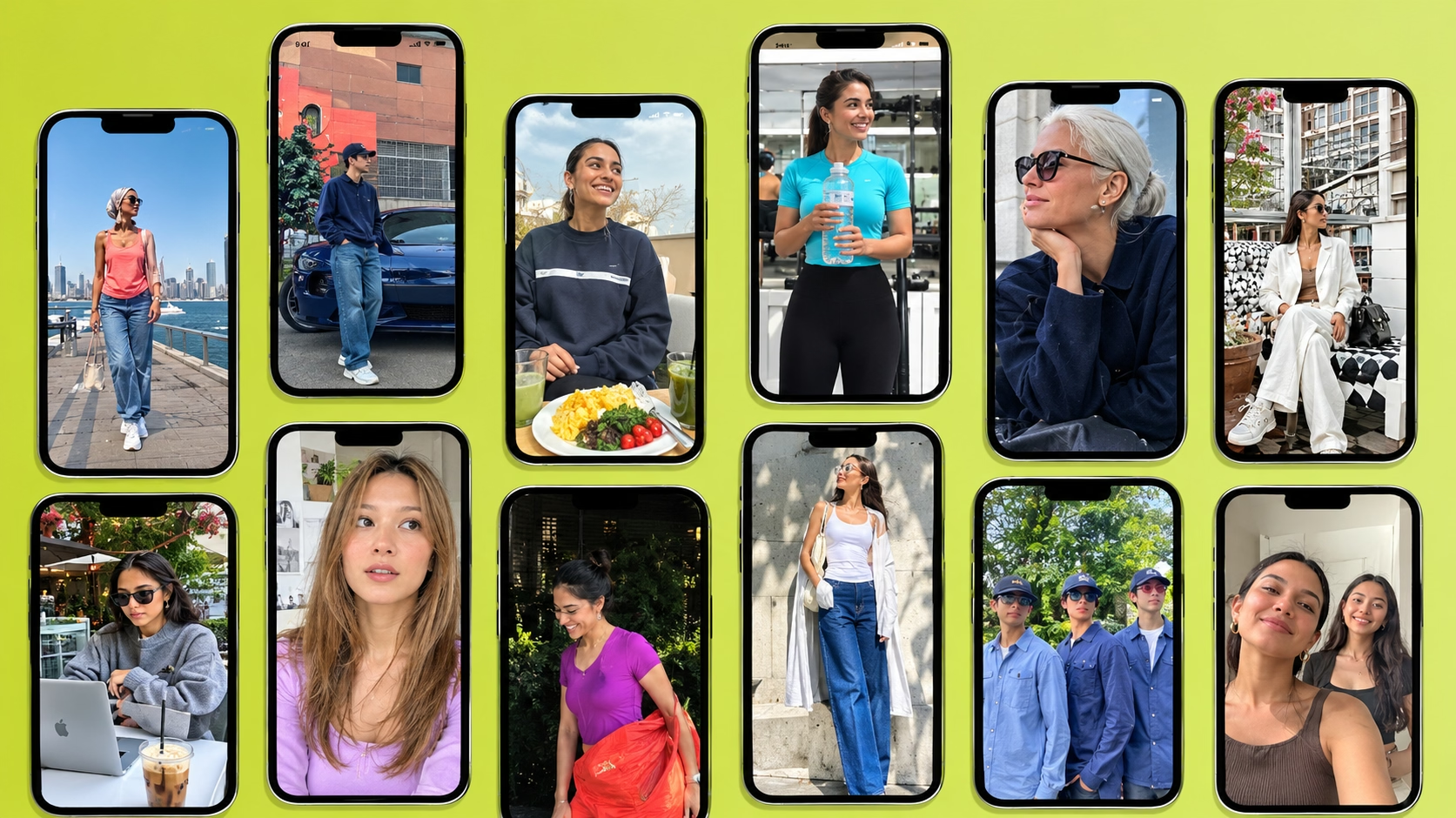
Here is what happened. One hundred creators went into more than 50 Chipotle restaurants across the US, UK, and Canada. They worked behind the line during morning prep, grilling chicken and slicing vegetables alongside staff. They shot 345 hours of footage between them. There was no script. No shot list. No director. No production company.
That footage became the campaign, which runs on national television, TikTok, Instagram Reels, and YouTube Shorts. It supports the return of Pollo Asado, absent since 2022, and the debut of Chili Lime Chips.
The casting is the interesting part
Chipotle deliberately cast creators who had nothing to do with food. The selection criterion was not audience overlap with a typical Chipotle customer. It was the ability to see and document a process. Creators who spend their careers making craft visible — the kind of people whose content is defined by patience, precision, and close observation — brought a perspective that food-focused accounts cannot. The footage looks like genuine curiosity about how food gets made rather than a promotional visit dressed as content.
Most brands narrow the creator brief to the obvious category match. Chipotle widened it to anyone defined by how they document process, which produced footage that looks noticeably different from standard restaurant content. That is a smarter brief, not a bigger budget.
How to find creators your competitors haven’t discovered yet covers the discovery approach that surfaces non-obvious creator choices before they become expensive and obvious.
Why This Changes the Rate Conversation
If a brand uses your footage as the advertisement rather than as a post about the advertisement, that is a usage question. Usage is priced differently from content. When the deliverable is footage the brand will cut into paid media, the negotiation is about licensing term, territory, and media spend, not about follower count and story frames. This is the single most practical implication of the Chipotle campaign for anyone currently briefing or being briefed on creator work. What to look for when evaluating and running creator partnerships covers how to structure these terms before the campaign starts.
The campaign is the first under new chief brand officer Fernando Machado and the first major work with agency KIDS.
What do the best campaigns this month have in common?
They changed something that already existed rather than building something new.
Aflac changed its own billboards
For a week in early September, photographs circulated of Ben Affleck spray-painting his surname across Aflac billboards in Los Angeles alleyways. Nobody could work out why.
On 5 September, Aflac confirmed it was them. Affleck directs the campaign through Artists Equity, the studio he co-founded with Matt Damon and Gerry Cardinale. The first spot is called Green Room and aired during College GameDay ahead of the Aflac Kickoff Game. Nick Saban, Deion Sanders, and Dawn Staley appear in the series. It runs through summer 2027.
The entire creative premise is that the two names sound alike. The mechanic: they let the confusion run for a week before claiming it. The speculation was the media buy.
Formula 1 changed its actual safety car
Disney and Pixar’s Cars turned 20, so Formula 1 and Mercedes-AMG gave the official Monza safety car a bespoke Cars livery for the race weekend. Lightning McQueen got an honorary lap.
The detail that travelled: McQueen Day fell on Saturday 5 September because his racing number is 95. Nobody needed that detail. Everybody posted it.
Crucially, they repainted the real car that leads the field, not a display vehicle parked beside the track. Most film and brand tie-ins add a mascot to an environment. This one altered the environment.
Huda Beauty changed its own name
Days before the Snatched Baddies campaign launched, Huda Beauty struck through its own name on Instagram and became “Cardi Beauty.” No caption, no explanation. A reasonable number of people concluded that Cardi B had bought the company.
The campaign film is a body-swap: Huda Kattan and Cardi B apply the new Ultra Snatched collection in separate lifts and emerge having swapped lives. Cardi ends up at Huda Beauty headquarters fielding questions about budgets and approvals. Huda struggles through choreography on a music video set.
The rename happens inside the film. The Instagram teaser was not a separate stunt. The brand acted out its own plot on its real account before anyone knew there was a plot.
Handing over your account name for a week is the one asset brands almost never risk.
Why are the cheapest ideas outperforming the expensive ones?
Because a coincidence costs nothing and a production costs everything, and audiences cannot tell the difference between the two once both are on a screen.
Consider what the strongest ideas this month actually required:
Aflac needed somebody to notice that “Aflac” and “Affleck” sound alike. The joke has been available since the company was founded in 1955.
Formula 1 needed somebody to notice that Lightning McQueen’s racing number is 95 and that 5 September can be written as 9/5.
Neither of those are production budgets. They are attention.
The expensive ones still worked, to be fair
Apple’s The Mighty Mac mini is handmade claymation from TBWA\Media Arts Lab, produced with Blinkink and Stoopid Buddy Stoodios and directed by Nicos Livesey. Characters and props were sculpted and painted by hand, then animated frame by frame over roughly nine weeks. The Mac mini becomes a bodybuilder, then a race car, then a rocket.
It works because the joke and the product specification are the same sentence: a very small object behaving like a very large one. Apple also released a separate behind-the-scenes film showing the animators at work.
Craft is not dead. It is just no longer the only route.
How is the creator’s role changing?
Two campaigns this month suggest the same shift from different directions.
Chipotle hired creators as the production department. The footage is the advertisement.
Maybelline cast Love Island USA stars Bryce and Trinity in “Brinity’s Beauty School,” a series of beauty challenges built around him doing her makeup. The bundle sells for $34.99 exclusively on TikTok Shop, not on Maybelline’s own site. The commerce lives where the audience already is.
A creator working on a paid media brief
The question I ask now before any deal is where this will actually run. Not where the post goes. Where the content goes. Those are different answers and they have different rates attached to them.
What this means for rate cards
In both cases, the creator’s output is not a post. It is footage or a retail channel.
If you are a creator, the questions to ask have changed. Where will this run, and for how long? Is my footage being cut into paid media? Am I being licensed, or am I being booked? Does the brand own this in perpetuity or for a defined term?
A post has a rate. Usage has a different one. Confusing the two is the most common way creators leave money on the table on exactly this kind of brief.
How to write a creator brief that doesn’t kill creativity covers how to be explicit about usage upfront so neither side is surprised when the content ends up in paid media.
The campaigns at a glance
| Campaign | What they changed | The mechanic | Roughly what it cost |
|---|---|---|---|
| Chipotle × 100 creators | Who holds the camera | 345 hours of creator footage becomes the national ad | High: 100 creators, 50 restaurants, 3 countries |
| Aflac × Ben Affleck | Their own billboards | A name coincidence, unclaimed for a week | Medium: celebrity, director, year-long run |
| Disney’s Cars × F1 | The actual safety car | A date that matches a racing number | Medium: licensing and a repaint |
| Huda Beauty × Cardi B | Their own account name | Brand acts out its own plot before revealing it | High: celebrity and a produced film |
| Apple Mac mini | Nothing. Pure craft | Product spec and joke are the same sentence | Very high: nine weeks of stop-motion |
What to take from all this
Look for what already exists before you brief something new. A name coincidence, a number that matches a date, a mascot that shares a word with somebody else’s product. Three of the strongest ideas this month were noticed rather than invented.
Changing something real beats producing something new. A repainted safety car, a defaced billboard, a renamed account. All harder to scroll past than a produced film, and all considerably cheaper.
If you are briefing creators, be explicit about usage. The Chipotle model is going to be copied, and the copies will not always be clear about whether they are buying a post or buying footage. Decide which one you mean and price it honestly.
If you are a creator, ask where the work will run. The most valuable brief of this period was not the one with the biggest follower requirement. It was the one where the footage became the advertisement.
- The strongest campaigns of September 2026 modified something real instead of producing something new: a repainted safety car, a defaced billboard, a renamed account, creator footage that became the ad itself
- Chipotle’s Behind the Foil campaign is the clearest signal of where creator briefs are going: when the creator’s footage becomes the advertisement, the negotiation is about usage rights and licensing, not follower count
- The cheapest ideas outperformed the most expensive ones: Aflac’s premise has existed since 1955, Formula 1’s mechanic was a date that matched a number, Huda Beauty’s teaser was its own real Instagram account
- Creator as production is a different contract from creator as distribution: if footage will run in paid media, the brief needs to say so and the rate needs to reflect it
- Craft is not dead: Apple’s claymation campaign worked because the joke and the product specification were the same sentence, which no budget shortcut can replicate