
Influencer marketing is one of the most time-intensive channels a brand team runs. A mid-size campaign involving thirty creators touches discovery, outreach, negotiation, briefing, content review, and payment — each of which requires human attention at multiple points. When you add it up across a full campaign, the hours are significant. And the team running it is often the same team running paid social, email, and organic social simultaneously.
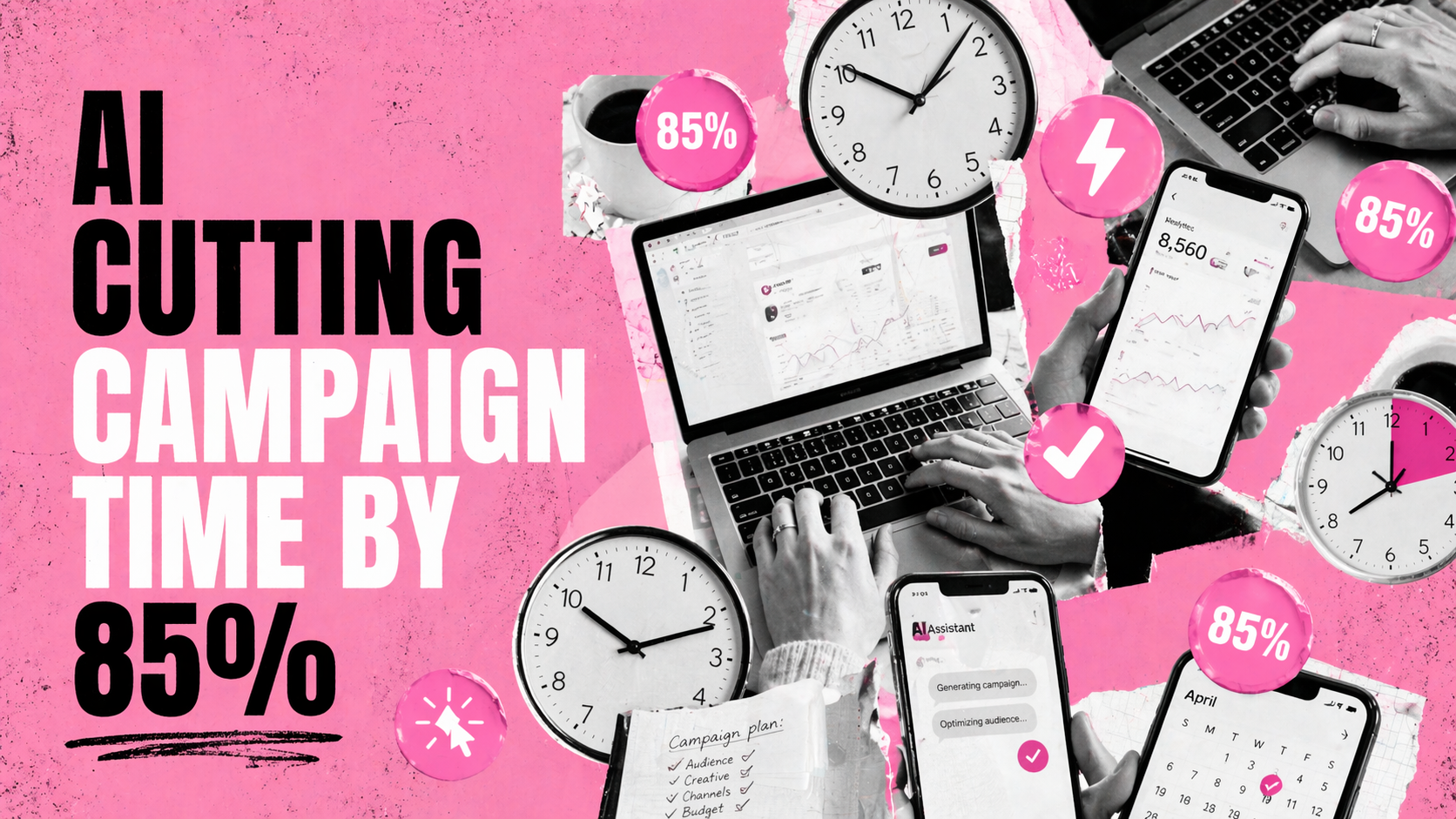
The brands that have adopted AI-powered creator marketing platforms report cutting campaign setup and execution time by 70 to 85 percent compared to running the same program manually. That is not a marginal efficiency gain. It is the difference between a two-person team running a meaningful always-on creator program and a two-person team choosing not to run creator marketing at all because the headcount cost is prohibitive.
Most marketing teams that step back and honestly track the time they spend on influencer marketing are surprised by how the hours distribute. The expectation is that strategy and creative direction dominate. The reality is that operational execution — inbox management, outreach drafting, negotiation follow-ups, brief sending, compliance checking — consumes most of the time. Why most influencer marketing teams are still running too manually maps this problem in detail. It is not a discipline problem. It is a structural one, and AI is the structural response to it.
Katie Gatti Tassin, Founder of Money with Katie
The best brand partnerships I have had are with teams that clearly had their act together operationally. They briefed well, responded quickly, and paid on time. That experience is not just nice to have — it directly affects how much creative energy I put into the work.
That observation from the creator side matters to the brand side: operational efficiency in running a creator program is not just an internal benefit. It produces better creative outcomes because creators invest more in partnerships where the brand is organised, communicates clearly, and delivers on commitments on time.
Where the Time Goes in a Manual Campaign
Before you can understand what AI changes, it helps to be precise about where manual campaigns actually consume time. The answer is not one or two steps that could be optimised with a better tool. It is every step in the workflow, and the problem compounds with every creator added to the roster.
Discovery is slower than most teams track. Finding thirty relevant creators for a mid-size campaign involves searching platform databases, assessing engagement rates, verifying audience demographics, checking for brand safety issues and past competitive brand deals, and building a shortlist that holds up to scrutiny. A thorough manual discovery process for thirty creators typically takes eight to fifteen hours of focused work. Teams that rush this step pay for it in poor creator-brand fit and content that underperforms relative to what the budget could have produced. Why finding the right influencers matters more than finding the most influencers makes the case for investing in discovery quality — which requires either time or infrastructure.
Outreach is deceptively time-consuming. A personalised outreach message that references a creator’s content, explains the campaign context, and establishes enough rapport for a genuine response takes fifteen to twenty minutes to draft well. Most teams do not draft them well: they compromise on personalisation to reduce the time cost, which depresses response rates and produces the kind of generic brand partnership emails that experienced creators recognise immediately and delete. For a campaign targeting sixty creators to confirm thirty, well-crafted personalised outreach is fifteen to twenty hours of work before a single creator responds.
Negotiation is unpredictable and parallel. Rate negotiation with thirty creators across individual email threads takes time that is genuinely hard to estimate because each conversation moves at a different pace. Following up with non-responders, managing counter-offers at different price points, tracking which conversations are at which stage, and keeping the campaign timeline intact while thirty individual negotiations run simultaneously is a significant coordination burden with a high error rate. A deal that slips through the cracks because someone forgot to follow up costs more than the time it would have taken to close it.
Briefing, compliance review, and payment add up. Brief preparation and delivery across a confirmed roster, content review for brand guidelines and FTC compliance requirements, and payment processing across individual invoices or contract milestones are all steps that take consistent time regardless of how smoothly the earlier stages went. For a thirty-creator campaign, these stages together typically account for nine to fifteen additional hours of team time.
What AI Handles in a Modern Creator Campaign
The AI time savings come from redistributing execution away from human labour rather than eliminating steps from the workflow. Every step still happens. The question is who, or what, runs each one, and what the difference looks like in practice at each stage.
Discovery: from fifteen hours to one or two. An AI-powered discovery system running continuous sweeps against campaign criteria — analysing audience demographics, engagement quality, brand safety signals, and content relevance across thousands of creator profiles simultaneously — produces a qualified shortlist in a fraction of the time a manual search requires. The human role shifts from executing the search to reviewing and approving the results. The shortlist that arrives is already filtered, ranked, and annotated with the data that informs the brand team’s decision. Review time is an hour or two, not a day.
Outreach: from twenty hours to near zero. Agent-driven outreach that personalises each message against the creator’s content, platform performance, and campaign fit — and then sends at scale — removes the single largest time block in a manual campaign. Personalisation quality is maintained because the model has access to each creator’s content and profile data. The human does not draft individual messages. The agent drafts, personalises, and sends, flagging responses for human review as they arrive. Response rates from well-personalised agent outreach are materially higher than from generic template broadcasts, which means the campaign reaches its confirmation targets faster as well.
Negotiation: from fifteen hours to exception handling only. Rate negotiation run by an AI agent within brand-defined parameters — maximum rates, acceptable deal structures, non-negotiable terms — across all concurrent conversations simultaneously removes the coordination overhead that makes manual negotiation the most unpredictable stage of a campaign. Exceptions outside the parameters flag for human review. Standard negotiations close without requiring a human to manage each exchange.
Brief delivery, compliance, and payment: automated at milestones. Brief delivery on deal confirmation, content compliance review against defined guidelines, and payment processing against delivery milestones all run through the agent layer without requiring a human to trigger each one. The brand team reviews content that passes compliance and approves payment for work that meets the delivery standard. The tracking and administration runs automatically.
Where the recovered time should go
The most valuable use of the 40-plus hours recovered per campaign is not running more campaigns faster. It is the strategic work that most influencer marketing teams report wanting to do and rarely get to: analysing which creator categories are producing the strongest results, refining brief language based on what has worked, deepening relationships with high-performing creators, and making the program more intelligent with each cycle. That work compounds. Administrative execution does not.
The Time Breakdown: Manual vs. AI-Powered
| Campaign stage | Manual workflow (hrs) | Agentic platform workflow (hrs) | Time saved |
|---|---|---|---|
| Creator discovery and shortlisting | 12 to 15 | 1 to 2 (review only) | ~87% |
| Outreach drafting and sending | 15 to 20 | 0.5 (monitoring) | ~97% |
| Negotiation and deal management | 10 to 15 | 1 to 2 (exceptions only) | ~88% |
| Brief preparation and delivery | 3 to 5 | 0.5 (approval) | ~90% |
| Content review and compliance | 4 to 6 | 1 to 2 (final review) | ~75% |
| Payment processing and admin | 2 to 4 | 0.5 (approval) | ~85% |
| Total | 46 to 65 hours | 4.5 to 8 hours | ~85% |
The four to eight hours the human team retains are genuine decision points: reviewing the shortlist, approving confirmed creators, evaluating content quality, and handling exceptions. These are the steps that require taste, judgment, and strategic direction. They remain human. The execution that does not require those things runs through the agent.
What “Personalised at Scale” Actually Means
One of the most common concerns about AI-driven outreach is that it will feel like a template. Creators receive enough templated campaign enquiries to recognise one immediately, and a generic opening message is a reliable way to get filed with the other fifty generic opening messages in a creator’s inbox.
Agent-driven outreach works differently from template broadcasting because it draws on each creator’s specific context: recent content, niche angle, audience profile, and past brand work. A template-based outreach says “Hi [Name], we love your content and would love to partner with you.” Agent-driven outreach says something closer to “We noticed your recent series on post-workout recovery and think your audience would respond well to how [Product] approaches that specific problem — here is why the fit makes sense for your followers.” The first is deleted. The second gets a response.
How AI agents handle the full creator outreach and deal management workflow covers the technical design of how genuine personalisation works at scale, and why it differs from the template-filling that earlier generations of outreach automation produced.
The distinction matters for response rates. Generic template outreach to sixty creators rarely confirms thirty. Well-personalised agent outreach — because it references specific content, frames the campaign around the creator’s audience context, and explains the fit rather than just describing the campaign — consistently achieves confirmation rates that make thirty-creator rosters reachable in a single outreach sweep rather than requiring multiple rounds.
The Compounding Benefit Over Time
One of the advantages of AI-powered campaigns that does not show up in first-campaign comparisons is what happens across multiple campaigns over time. Manual programs largely reset at the end of each campaign: the creators who performed well are known anecdotally, the brief that worked is in a folder somewhere, the rate that converted is in someone’s memory. When the next campaign starts, the team rebuilds from a roughly similar starting point.
Agentic programs compound. Creator performance data is retained and queryable. Creators who delivered quality content at the right rate are weighted more favourably in the next discovery sweep. Brief language that correlated with strong submissions is carried forward. Rate benchmarks from past deals inform negotiation parameters for future ones. The program gets smarter with each cycle rather than starting over.
This is why always-on creator programs consistently outperform episodic campaigns, and why what experienced teams eventually learn about influencer marketing almost always includes this insight: the programs that compound are the ones that win, and compounding requires infrastructure, not just effort.
What the 15 Percent That Stays Human Actually Is
The 15 percent of campaign time that stays human in an agentic workflow is not incidental overhead. It is the part of creator marketing that determines whether the program produces good results or merely produces content at scale.
The decisions about which shortlisted creators genuinely fit the brand beyond the data signals. The judgment calls about content that passes compliance review but feels off-brand in a way a checklist cannot capture. The creative feedback that makes the next brief better. The relationship decisions about which creators are worth investing in for longer-term partnerships. The strategic choices about which categories and tiers to prioritise as the program evolves.
These are also the things most brand teams report wanting to spend more time on and actually spending the least time on in manual programs. The operational overhead of executing discovery, outreach, and negotiations keeps most teams from getting to the work that would make the program materially better. AI-powered platforms remove that overhead and return the work to the people best positioned to do it.
The 85 percent time saving matters less as an efficiency metric and more as a redistribution: from execution that requires no particular human judgment to decisions that require a great deal of it. That redistribution is what actually changes what kind of creator program a lean team can run. And for most teams, the gap between what is currently possible and what becomes possible with that time back is wider than the headline number suggests.
- A 30-creator campaign run manually takes 46 to 65 hours of team time. An agentic platform cuts that to 4 to 8.
- The 85% of time AI recovers is execution without judgment — the 15% that stays human is where taste, strategy, and creative direction actually live.
- Experienced creators spot a template outreach message immediately. Agent-driven personalisation references specific content and frames the campaign around their audience — which is why response rates are materially higher.
- The compounding benefit only shows up over time: creator performance data carries forward, brief language improves, and each campaign cycle makes the next one smarter.