
Most influencer marketing tech stacks in 2026 are not AI-native. They are AI-adjacent: traditional platforms that have added AI features to an architecture that still requires humans to coordinate the work.
The distinction matters because the coordination layer is where programs slow down. Discovery, analytics, and reporting dashboards are table stakes. The gap between a program that runs at capacity and one that runs at scale is what happens in between: the outreach sequences, the follow-ups, the contract logistics, the content monitoring, the reporting compilation. That layer is still manual in most programs, regardless of how sophisticated the platform looks.
An AI-native stack is built to close that gap. Here is what it actually looks like, broken down by function.
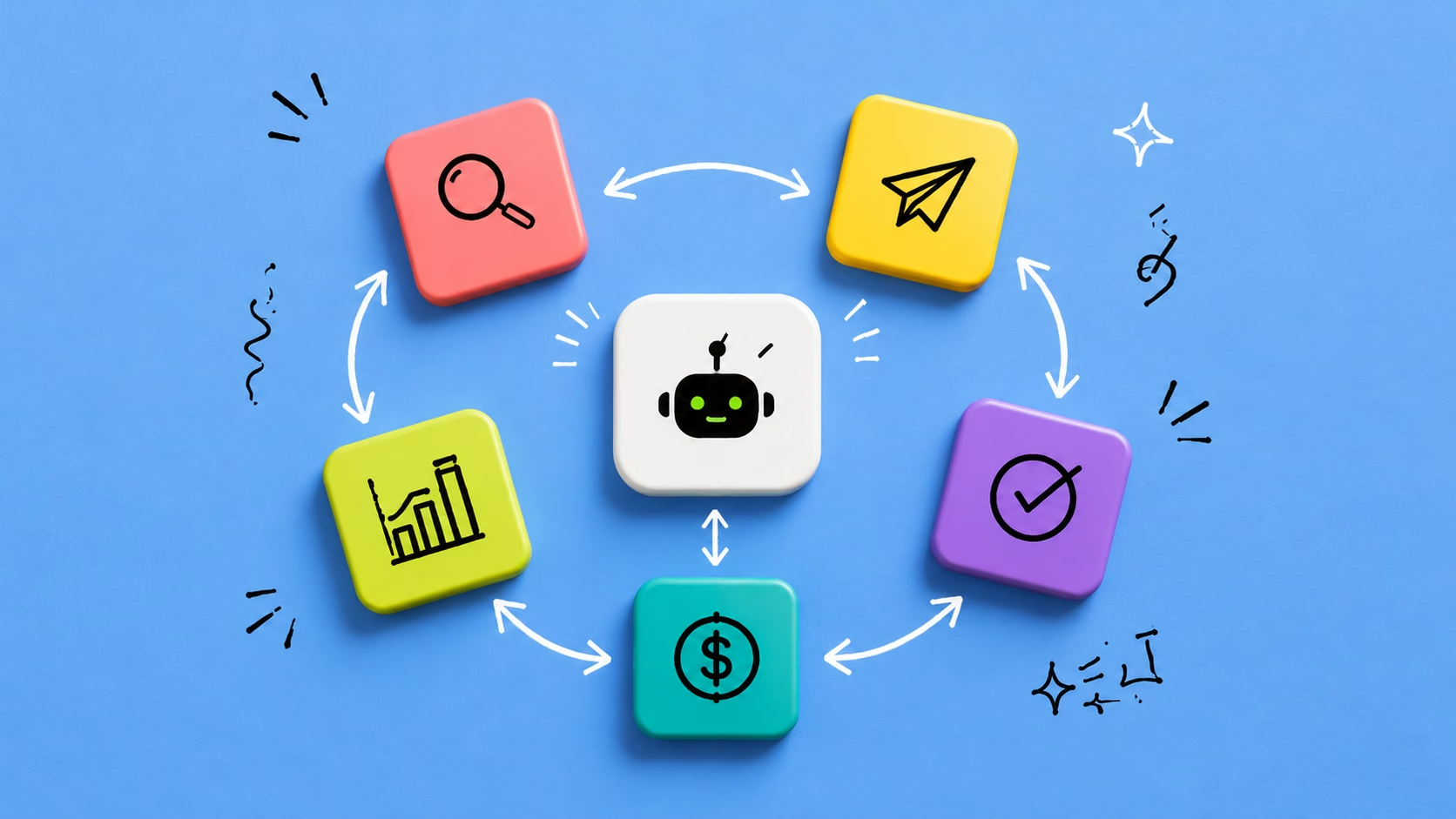
The 5-Layer Influencer Ops Stack
Layer 1: Discovery and Qualification
What it does: Identifies creators by audience demographics, engagement quality, content fit, and brand alignment. Vets for audience authenticity. Surfaces qualified candidates for review.
What most teams are running: A platform with a search database (Modash, Aspire, HypeAuditor, or similar). Teams search by follower count, niche, engagement rate, and location. Vetting is manual: someone pulls the profile, reviews recent posts, checks audience demographics, and makes a judgement call.
What AI-native looks like: The discovery layer is still database-driven, but qualification is automated. AI cross-references audience quality signals, engagement patterns, and content alignment against your brief. Qualified candidates are surfaced for a final human review rather than requiring manual vetting of each profile.
Tools that handle this layer: Modash (380M+ database, API-accessible), HypeAuditor (fraud detection), Aspire (marketplace with opt-in creators). The qualification automation layer is typically where an agentic platform adds value on top of these databases.
Layer 2: Outreach and Relationship Management
What it does: Initiates contact with qualified creators, manages follow-up cadences, tracks conversation status, and maintains relationship history across campaigns.
What most teams are running: Email and DMs with manual tracking. A spreadsheet or CRM column for “contacted / responded / interested / declined.” Follow-ups happen when someone remembers or has time. Response rates are lower than they should be because the cadence isn’t consistent.
What AI-native looks like: Outreach sequences run automatically. First contact goes out based on qualification triggers, follow-ups are scheduled and sent without manual intervention, and conversation status updates automatically based on creator responses. The team reviews inbound responses rather than managing the outreach queue.
Tools that handle this layer: CRM infrastructure (HubSpot, Attio) can handle the pipeline, but most influencer platforms don’t connect well to them. An agentic execution layer handles the sequences and the translation between platform data and CRM state.
Layer 3: Contracting and Logistics
What it does: Manages brief delivery, contract execution, product shipment tracking, and deadline management across active creators.
What most teams are running: Email chains for briefs, DocuSign or HelloSign for contracts, manual Shopify or 3PL coordination for product shipments, and a spreadsheet to track who has signed and who has received their product. This layer generates the most back-and-forth and the most untracked tasks.
What AI-native looks like: Brief delivery is templated and triggered automatically at the right stage in the workflow. Contract status is tracked without manual checking. Shipment status pulls from logistics data and surfaces exceptions (a creator hasn’t received product with a deadline approaching) rather than requiring manual monitoring.
Tools that handle this layer: DocuSign / HelloSign for contracts, Shopify / 3PL integrations for logistics. Coordination between these tools is where manual overhead concentrates — and where an agentic layer eliminates it.
Layer 4: Content Tracking and Approvals
What it does: Monitors posting deadlines, collects content for approval, tracks live posts across platforms, and flags performance outliers.
What most teams are running: Manual monitoring: someone checks creator feeds, screenshots posts, or uses platform analytics to verify that content went live. Approval workflows run through email or Slack. Content collection for repurposing is inconsistent because it depends on someone remembering to do it.
What AI-native looks like: Content tracking is automated against posting deadlines. Approval workflows trigger automatically when content is submitted. Live posts are monitored for performance signals, with outliers (exceptional engagement, policy concerns) surfaced for review rather than requiring continuous manual monitoring.
Tools that handle this layer: Native platform analytics (Instagram Insights, TikTok Analytics) and third-party monitoring tools (Brandwatch, Sprinklr). An agentic layer coordinates the monitoring cadence and surfaces what requires attention.
Layer 5: Reporting and Payments
What it does: Compiles campaign performance data across creators and channels, produces reporting for stakeholders, and manages creator payment workflows.
What most teams are running: A manual reporting process: someone pulls data from each platform, pastes it into a spreadsheet, calculates aggregates, and produces a report. Payment tracking is a separate spreadsheet. The reporting cycle is a recurring time commitment, often taking several hours per campaign.
What AI-native looks like: Performance data aggregates automatically across creators and channels. Reports compile on schedule without manual data collection. Payment triggers run from campaign completion status rather than requiring manual tracking. The team reviews outputs rather than producing them.
Tools that handle this layer: Platform analytics, Google Analytics / GA4 for conversion attribution, payment processors (Stripe, Tipalti). Data aggregation and report production is the layer where automated workflows create the most time recovery.
How the Layers Interact
The stack creates value not just within each layer but across them. A creator who completes qualification in Layer 1 should move into the outreach sequence in Layer 2 without a human manually triggering it. A signed contract in Layer 3 should trigger brief delivery and set tracking parameters in Layer 4. A completed campaign in Layer 4 should trigger the reporting cycle in Layer 5 and queue the payment.
In a manual stack, these transitions require someone to notice that the previous step is done and take the next action. In an AI-native stack, they happen automatically. That’s where the operational leverage comes from: not from faster individual steps, but from transitions that don’t depend on someone’s attention.
Where Scoop Fits
Scoop is built for teams who have realised that the platform is not the stack. The discovery database, the analytics dashboard, the reporting view — these are necessary but not sufficient. The coordination between them is where programs slow down, and that coordination is what Scoop’s agents handle.
The full breakdown of what agentic AI does for influencer programs covers how this plays out across a running program. The comparison of AI tools versus agentic platforms covers the architectural distinction if that’s where the question sits.
If you’re evaluating whether your current stack has the right architecture or whether the coordination layer is the constraint — book a 15-minute call to see how it works.
- An AI-native stack automates execution, not just analysis: outreach, follow-ups, content tracking, and reporting run without manual coordination
- The five layers are discovery/qualification, outreach/relationship, contracting/logistics, content tracking/approvals, and reporting/payments: most programs have tools for the first and last layers but manual coordination in between
- The transitions between layers are where most operational overhead lives: AI-native architecture handles these transitions automatically rather than waiting for human attention
- The platform is not the stack: a discovery and campaign management platform covers part of the work; the coordination layer is what AI-native teams are building infrastructure around specifically
- Scoop’s agents handle the coordination layer that traditional platforms still leave on the team