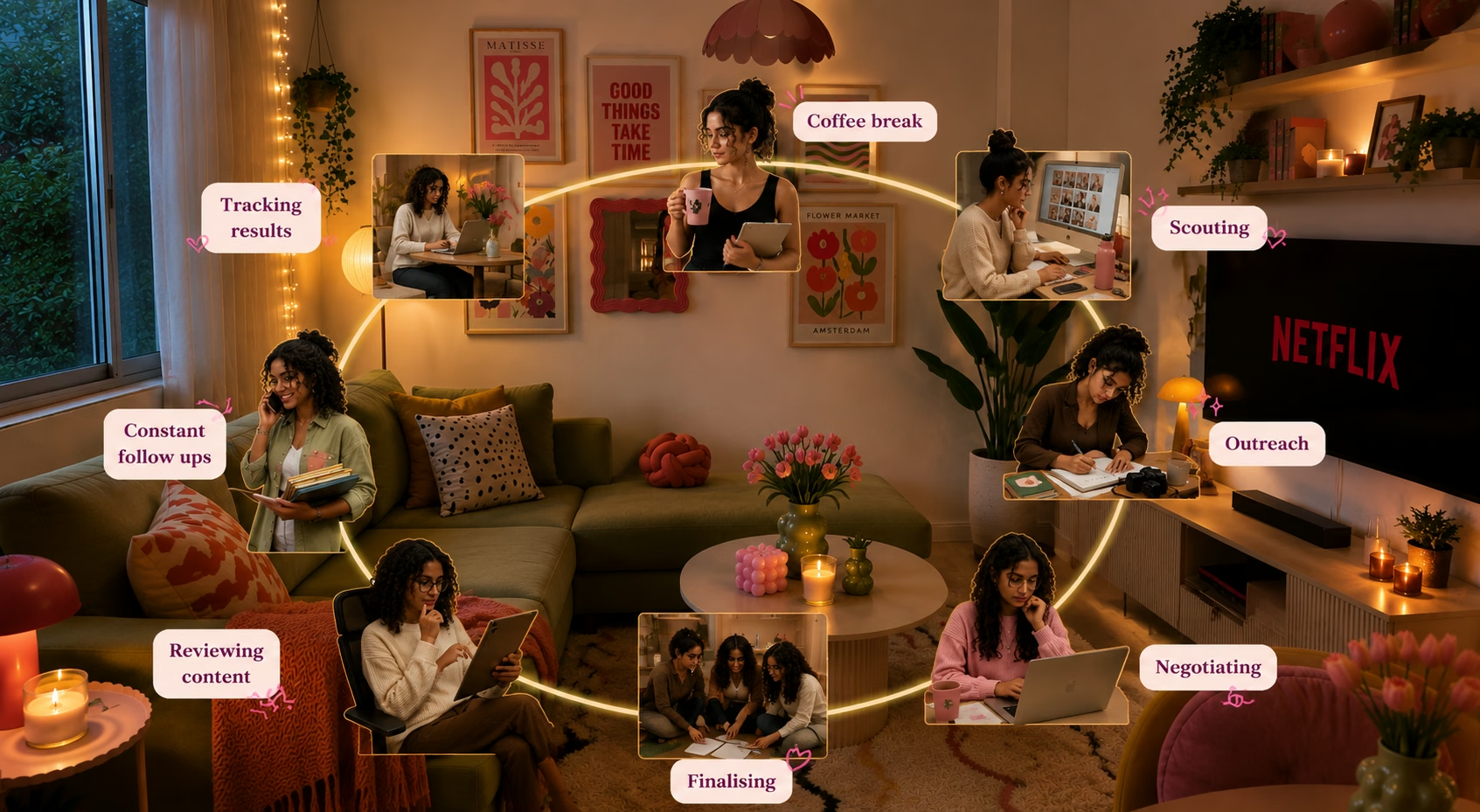

Most influencer marketing content about AI focuses on discovery: better search, smarter recommendations, faster creator identification. That’s a real improvement. But discovery is one stage in a campaign lifecycle that has several distinct stages, and it’s the one that platforms have been improving the longest.
The more useful question in 2026 is what happens to the rest of the lifecycle when AI agents own it. Not just better search, but agents that take a campaign from brief to payment with your team making the decisions rather than doing the execution.
Here’s what that actually looks like, stage by stage.
Stage 1: Campaign Brief and Setup
Without AI agents: A campaign manager writes a brief from scratch, defines targeting criteria, sets up the campaign in the platform, and creates tracking infrastructure. For a mid-size campaign, this is a half-day of setup work before any creator contact happens.
With AI agents: The agent generates a brief draft from campaign parameters you define: product, target audience, content type, timeline, budget. You review and approve. The agent sets up tracking, creates the campaign structure, and prepares outreach templates personalized to the creator categories you’re targeting. Setup time compresses from hours to a review-and-approve cycle.
What the human does: defines strategy, approves the brief, sets parameters. What the agent does: everything structural.
Stage 2: Creator Discovery and Vetting
Without AI agents: A team member runs searches in the platform, applies filters, browses results, bookmarks candidates, manually cross-references audience data, and builds a shortlist. For a campaign needing 30 creators, this is a full day of work, sometimes more.
With AI agents: The agent runs discovery against your defined criteria, applies audience quality checks, cross-references against your previous campaign history, and surfaces a pre-vetted shortlist with supporting data. You review creators and make selection decisions.
The bottleneck shifts from finding to deciding. Your team’s time is spent on judgment calls, not search execution. The brand and creator collaboration guide covers what good creator evaluation looks like once you have a shortlist.
Stage 3: Outreach and Negotiation
Without AI agents: Personalized outreach is written per creator or semi-personalized from a template. Responses tracked manually or in a spreadsheet. Follow-ups managed by whoever remembers to send them. Negotiation conducted over email with context living in someone’s inbox.
With AI agents: The agent drafts personalized outreach for each creator on the shortlist, referencing their specific content and framing the collaboration in terms relevant to them. It sends outreach, tracks responses, and runs a follow-up sequence automatically for non-responders. When a creator responds with questions or counter-offers, the agent flags it for your team with context.
The human touch stays in negotiation and relationship judgment. The volume work (drafts, sends, follow-ups, tracking) runs without manual input.
Stage 4: Contracting and Logistics
Without AI agents: Contracts sent manually, tracked in a spreadsheet. Product coordinated via email. Shipping confirmed by checking in with the creator. Brief acknowledged or not, depending on whether anyone followed up. For 30 creators, this is 30 parallel coordination sequences running simultaneously.
With AI agents: The agent sends contracts, tracks signature status, and follows up on unsigned agreements before the campaign window opens. For gifting campaigns, it coordinates with your fulfilment workflow and tracks delivery confirmation. Brief acknowledgment is tracked and chased automatically. The agent surfaces exceptions (a creator who hasn’t signed three days before their posting date) for your team to handle directly.
The coordination that would otherwise live in a shared inbox and a spreadsheet runs inside the agent. Your team sees exceptions, not status updates.
Stage 5: Content Tracking and Approvals
Without AI agents: Someone checks creator accounts for content. Stories get missed before expiring. Incorrect hashtags mean posts don’t get captured by the platform. Approval workflows run through email. Revision requests go back to creators manually. At 30 creators, this is a continuous monitoring job.
With AI agents: The agent monitors creator accounts against the campaign window, flags content that’s posted, archives Stories before they expire, and identifies content that used incorrect tagging. Approval workflows route drafts to the right reviewer automatically. Revision requests are tracked and followed up.
The human role is the actual review: is this on-brand, is the disclosure right, does this need changes. The agent handles the workflow around those decisions.
Stage 6: Performance Tracking
Without AI agents: Performance checked manually or through platform dashboards. Mid-campaign visibility depends on how often someone pulls data. Issues (a creator significantly underperforming, content driving unusual engagement) get noticed when someone checks, not when they happen.
With AI agents: Performance tracked continuously as the campaign runs. The agent surfaces outliers proactively: a creator performing significantly above or below their baseline, content driving engagement patterns worth noting, posts that have gone live but aren’t tracking correctly. Your team gets alerted to what matters rather than having to go looking.
This is the shift from reactive to proactive tracking. The benchmarks that matter in creator marketing give context for what to look for at each stage.
Stage 7: Reporting and Payment
Without AI agents: Campaign ends. Data exported from the platform. Cross-referenced with creator list and tracking links. Formatted into a stakeholder report. Payment processed per creator. This is several hours of structured, repeatable work at the end of every campaign.
With AI agents: Reporting compiles as the campaign runs. The end-of-campaign report generates in the format your stakeholders use, with creator-level performance, audience benchmarks, and campaign totals. Payments are processed automatically based on deliverable completion and agreed rates. The close-out work that used to take a day takes an hour of review and approval.
What This Means for Your Team
The consistent theme across every stage is the same: execution moves to the agent, decisions stay with the human. Your team’s time is spent on creative direction, relationship judgment, strategy, and exception handling, not on follow-up emails, status tracking, and export formatting.
This isn’t about replacing the team. It’s about what the team spends its time on. The difference between AI tools and agentic platforms covers why this architectural shift matters differently from adding AI features to an existing platform.
Scoop is built around this execution layer. Its AI agents run the full campaign lifecycle described above: discovery through payment, with your team making decisions rather than doing administration. Book a demo to see what a campaign looks like when the execution work runs itself.
- AI agents handle the execution layer of influencer campaigns: outreach, follow-ups, logistics, content tracking, reporting, and payments: the structured, repeatable work that currently sits on your team by default
- The human role shifts from execution to decisions: creative direction, creator selection, relationship judgment, strategy, and exception handling
- Discovery is only one of seven campaign stages: agents that own the full lifecycle deliver more operational value than those that improve discovery alone
- The difference from platform automation is context-awareness: agents interpret what’s happening across the program and surface what needs attention, rather than executing fixed if-then rules
- Reporting and payment are the clearest immediate wins: structured, repeatable work that compresses from hours to a review-and-approve cycle when agents own it