
Influencer marketing doesn’t usually fail because teams choose bad creators. It breaks because the way creators are discovered no longer matches how influence actually works today.
As brands move away from celebrity-heavy strategies and toward smaller, more trusted voices, the mechanics of discovery start to matter far more. Scale is no longer about reach alone. Trust, relevance, and repeatability now sit at the center of performance. And this is exactly where manual discovery begins to fall apart.
What once worked for a handful of campaigns quietly becomes one of the biggest drains on time, budget, and confidence as programs grow.
Why Teams Are Rethinking Scale and Trust
The shift toward micro-creators has changed the rules of influencer marketing.
Instead of betting on one large creator to deliver awareness, teams now work with many smaller creators who influence decisions inside specific communities. This approach delivers stronger engagement and better alignment, but it also demands a different kind of rigor.
Evaluating trust at scale is not something intuition handles well.
When discovery relies on scrolling feeds and saving profiles, decisions lean heavily on aesthetics, familiarity, or follower count. These signals are easy to spot, but they are weak predictors of long-term performance. As creator volume increases, so does the risk of misalignment.
This is why many teams are reassessing how they think about scale and trust altogether. It’s no longer about finding more creators. It’s about understanding which creators consistently earn attention, credibility, and action.
If this shift feels familiar, it reflects a broader change in how influence is working, read more on The Rise of Micro-Creators: Why Brands Are Ditching Celebrity Influencers
The Quiet Cost of Manual Discovery
Manual discovery rarely feels expensive in the moment. It feels exploratory. Even productive. But over time, it becomes one of the least efficient parts of an influencer program.
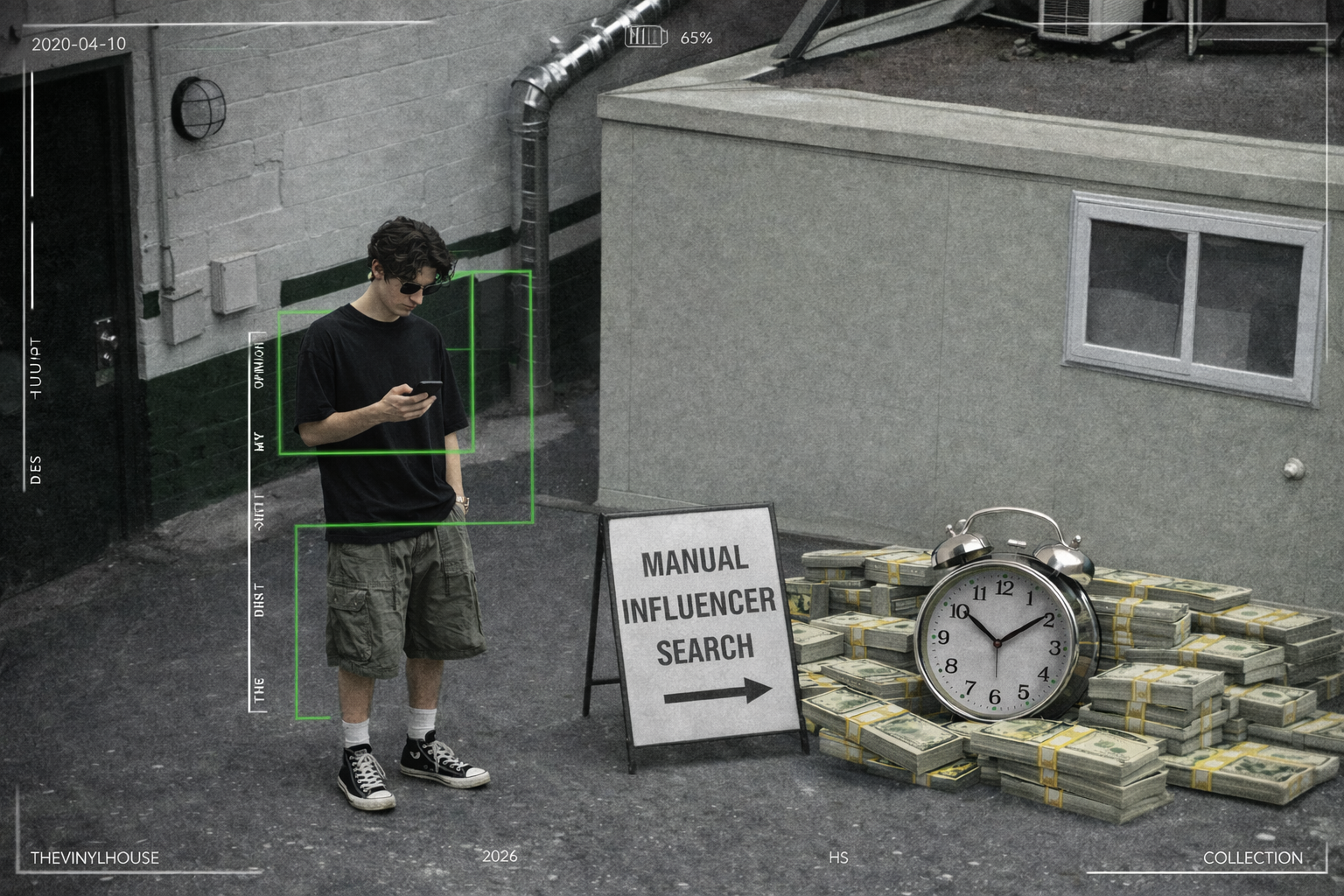
Each campaign starts the same way. Teams search platforms, review profiles one by one, cross-check engagement, skim comments, and try to piece together whether a creator feels right. Notes get captured in spreadsheets, links get saved in documents, and context lives mostly in people’s heads.
None of this compounds.
When the next campaign begins, the process resets. Past insights are hard to find. Performance history is fragmented. Decisions get made again without the benefit of learning.
The result is not just lost time. It’s lost leverage.
When Growth Exposes the Cracks
Manual discovery tends to work only while programs are small.As soon as teams begin running overlapping campaigns, reusing creators, or reporting performance internally, friction appears. Conversations overlap. Context disappears. The ability to compare outcomes across creators becomes limited. This is especially problematic in micro-creator programs, where performance differences can be subtle but meaningful. Without structure, teams struggle to understand why certain creators convert while others don't, even when surface metrics look similar. At that point, influencer marketing starts to feel unpredictable. Confidence drops. Scaling feels risky instead of repeatable.
Why Adding More Creators Isn’t the Answer
When discovery feels slow or inconsistent, the instinct is often to widen the net. More creators. More outreach. More activity.
But increasing volume without improving discovery simply increases operational load. Negotiations multiply. Approvals slow down. Reporting becomes harder to interpret. The program grows louder, not smarter.
This is one of the reasons influencer marketing often feels harder to scale than other channels. Effort increases, but clarity doesn’t. The problem isn’t creator supply. It’s the absence of systems that turn discovery into learning.
Discovery as a Decision System
The teams that scale influencer marketing successfully don t abandon judgment. They support it. Instead of treating discovery as a search task, they treat it as a decision system. Past performance informs future choices. Context carries forward. Patterns become visible.
Discovery shifts from Who should we try? to What do we know works, and why?
This is also where teams begin to notice the difference between tools designed to surface creators and tools designed to support ongoing programs. The distinction isn’t about feature depth. It’s about whether insight accumulates or disappears after each campaign.
Neal Schaffer, Influencer Marketing Strategist
Influencer marketing doesn’t fail because brands choose the wrong creators. It fails because they don’t have a system for choosing them repeatedly.
Manual discovery forces teams to rely on memory and intuition in a space that increasingly rewards structure and learning.
What This Means Going Forward
As influencer marketing matures, trust becomes harder to evaluate and more valuable to get right. If discovery still depends on scrolling, screenshots, and scattered notes, every campaign carries hidden costs.
Launches slow down.
Performance feels inconsistent. Justifying spend becomes harder. Teams that rethink discovery aren’t trying to move faster. They re trying to move with confidence.
Final Takeaway
Manual influencer discovery worked when programs were small and stakes were low. It doesn’t hold up in a world built on micro-creators, trust, and repeatable outcomes.
The teams that succeed aren’t discovering more creators.
They’re discovering with intent, using systems that let every campaign make the next one smarter.