
Influencer marketing is growing up. What began as experimental collaborations and short-term brand mentions is now evolving into something far more deliberate. As we move toward 2026, creators are no longer treated as campaign assets. They are becoming long-term revenue partners, shaping demand, trust, and sustained growth. This shift is also changing how brands evaluate influencer marketing platforms, how they compare tools, and how they think about value beyond impressions and reach. The real question today is not who can post for you. It is who can grow with you.
The Shift Beneath the Surface
The influencer marketing industry has expanded rapidly, but its maturity is showing in subtler ways. Budgets are higher, scrutiny is sharper, and marketing leaders are asking harder questions about sustainability. What happens after the campaign ends? What knowledge is retained? What relationships actually deepen? For many teams, the honest answer is very little. Creators are often rediscovered, renegotiated, and re-evaluated every quarter. Insights live in isolated reports. Relationships reset instead of compounding. This is where the old model begins to show strain.
The future of influencer marketing is not louder messaging, it is deeper alignment.
Seth Godin, Marketing Strategist
Marketing is no longer about the stuff you make, but the stories you tell.
Why the Old Model Falls Short
Traditional influencer workflows were built for speed, not continuity. They worked when influencer marketing was experimental. They struggle now.
Many brands still depend on fragmented influencer discovery tools, manual outreach, and disconnected reporting. Even tools commonly listed in an influencer marketing platforms list often focus on only one stage of the workflow. This forces teams to repeatedly rediscover creators, renegotiate terms, and relearn the same lessons.
The result is inefficiency and lost momentum.
Content That Builds Over Time
Influencer marketing is no longer about borrowed attention. It is about shared outcomes. As creators move from campaign collaborators to revenue partners, brands shift from transactions to relationships. Growth compounds when creators are trusted not just to speak, but to shape how brands are experienced over time.
Influencer Discovery, Redefined
Understanding influencer discovery meaning is central to this shift.
Influencer discovery is no longer about finding creators with large followings. It is about identifying creators who align with brand values, resonate with the right audience, and deliver repeatable results.
Modern influencer discovery platforms surface patterns from historical performance. Advanced influencer discovery services and tools focus on intelligence rather than inventory, helping brands invest in relationships that last.
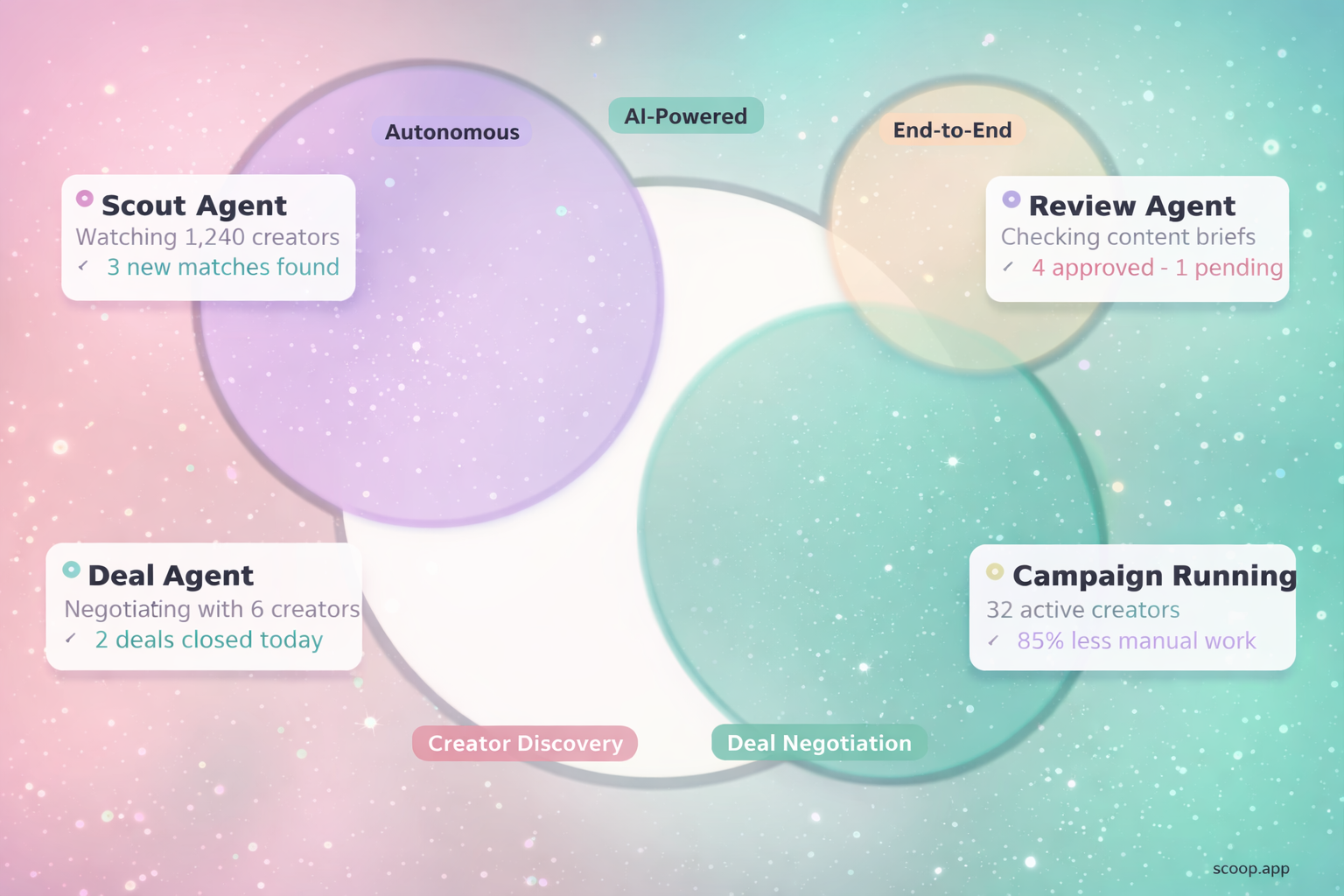
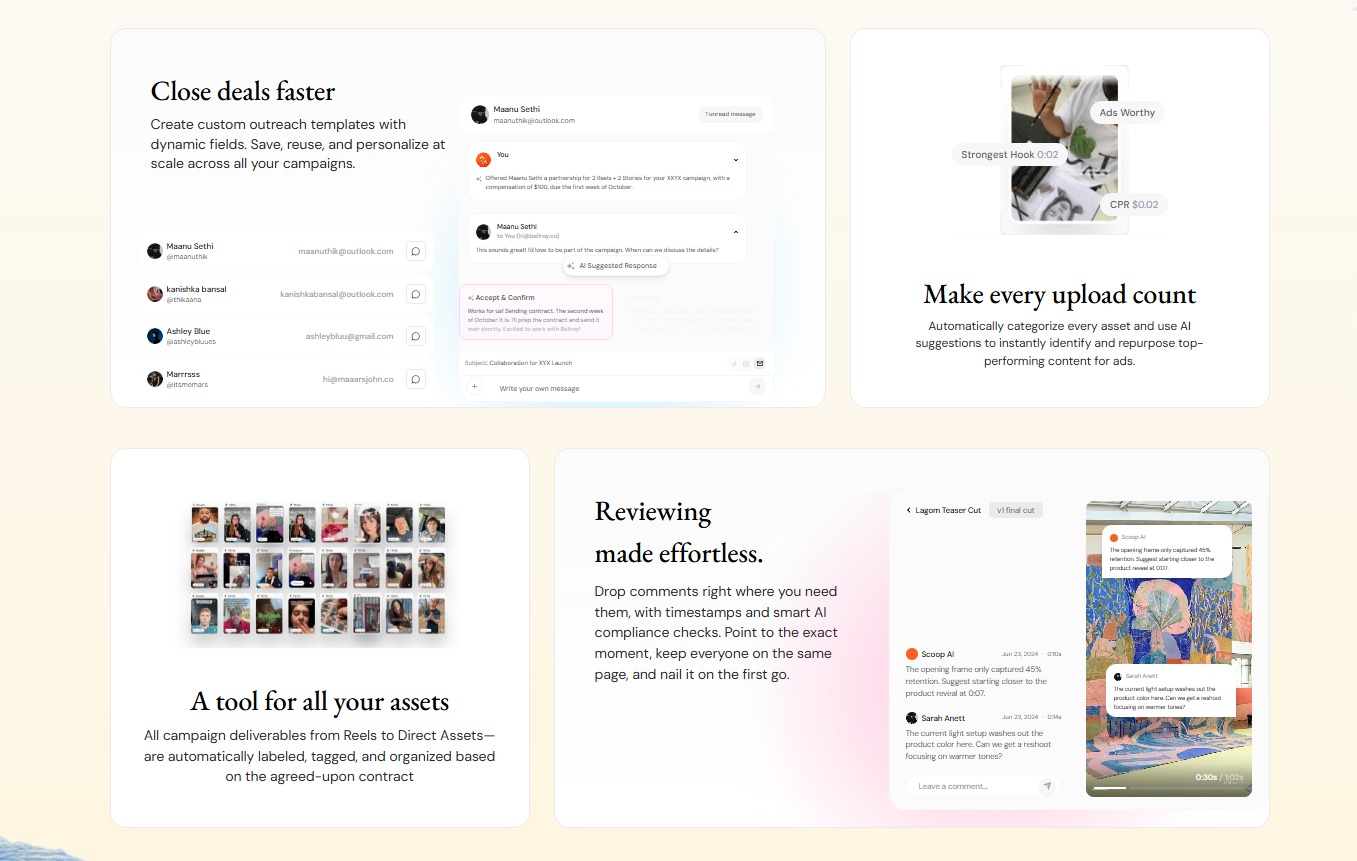
As influencer marketing matures, brands increasingly need more than isolated tools for discovery or reporting. They need a system that connects influencer discovery, campaign management, negotiations, and performance into one continuous workflow. Platforms like Scoop app are built for this shift, helping teams move beyond one-off activations toward long-term creator partnerships that drive repeatable revenue. By combining intelligent influencer discovery with automated outreach, centralized collaboration, and performance memory, Scoop supports the new influencer model where creators are treated not as placements, but as revenue partners.
Choosing the Right Platform
As brands compare options, comparison influencer marketing software platforms has become a strategic exercise.
When evaluating the est influencer marketing platforms, teams look for systems that:
- Support discovery and campaign management together
- Centralize communication and approvals
- Preserve learnings across campaigns
- Scale without adding operational complexity
The right platform does not just help launch campaigns. It helps relationships mature.
What to Look For in a Modern Platform
For brands planning beyond 2026, several capabilities stand out. Discovery with context Discovery should adapt based on campaign goals and historical learnings. Integrated campaign management Outreach, content tracking, and approvals should live in one place. Reusable intelligence Past performance should inform future decisions automatically. Operational scalability The system should grow with the team, not add complexity. These elements separate tools from systems.
A Practical Perspective
Imagine a brand planning multiple launches across the year. With traditional tools, each launch begins from scratch. New creators. New negotiations. New learnings. With a modern platform, the brand builds on what already exists. High-performing creators return. Proven content formats reappear. Negotiations improve with context. Over time, creators stop feeling external. They become part of the brand s growth engine.
Conclusion
Influencer marketing in 2026 will feel calmer and more intentional. The brands that succeed will be those that invest in relationships, systems, and learning. They will use creators not as temporary reach multipliers, but as trusted revenue partners. And they will choose influencer marketing platforms that are designed not for moments, but for momentum.