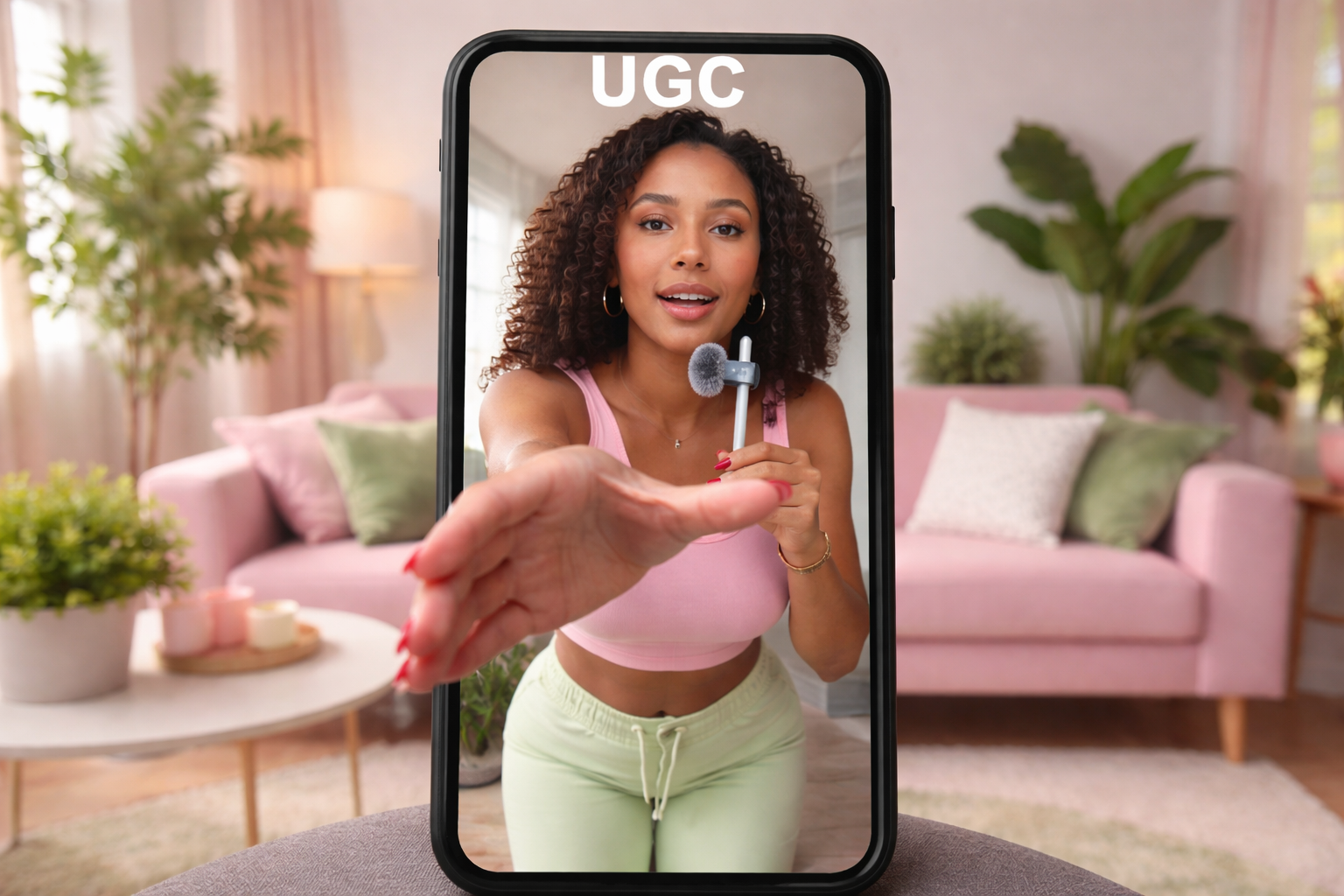

UGC (user-generated content) is any content that is photos, videos, reviews, or social posts, created by real people about your brand, rather than by your marketing team. It’s one of the highest-trust content formats available to brands today, and in 2026 it’s become central to how serious creator programs operate.
This guide covers everything brands need to know: what counts as UGC, why it works, how to collect it systematically, and how platforms like Scoop (scoop.app) are helping marketing teams run UGC programs without the manual overhead.
Key Takeaways
- UGC is content made by customers, creators, or fans and not your brand’s own team
- It consistently outperforms brand-produced content on trust and conversion metrics
- There are five main types: social posts, reviews, videos, testimonials, and creator-produced UGC
- Brands that run structured UGC programs collect better content faster and repurpose it across channels
- Agentic platforms like Scoop automate the creator side of UGC collection such as discovery, outreach, and approvals, so your team focuses on strategy, not admin
What exactly counts as UGC?
User-generated content is any content about your brand that was created voluntarily by someone outside your organisation a customer, a creator you’ve worked with, a fan, or even an employee.
The key word is created by someone else. A polished brand photoshoot is not UGC. A creator’s unboxing video, a customer’s Instagram story, a five-star review on your product page, or a TikTok someone made after trying your product, those are all UGC.
In practice, brands distinguish between two categories.
Organic UGC — content people create unprompted. A customer posts about your product because they loved it. No brief, no compensation, no campaign. This is the most credible form of UGC and the hardest to generate consistently.
Contracted UGC — content you commission from creators specifically for UGC purposes. The creator is paid to produce content that looks and feels native (not like an ad), which you then own the rights to and use across your own channels. This is the form of UGC most brands are actively scaling in 2026.
Both types are valuable. The difference is predictability. Organic UGC is high-trust but unreliable. Contracted UGC gives you the same authentic aesthetic with a repeatable supply chain behind it.
The Five Types of UGC Brands Use Most
1. Social media posts and stories Photos and videos posted on Instagram, TikTok, and YouTube by creators or customers showing your product in real life. The most shareable format and the most visible.
2. Video reviews and unboxings Long-form or short-form video where someone opens, tests, or reviews your product on camera. YouTube and TikTok are the primary platforms. High conversion impact — viewers see exactly how the product looks and works before buying.
3. Written reviews and testimonials Reviews on your product pages, Google, Amazon, G2, or third-party platforms. Often underestimated as UGC — text reviews are the most-cited content type in AI search results (Perplexity, Google AIO), which makes them increasingly valuable for discoverability as well as conversion.
4. Reels and short-form video Creator-produced TikToks and Instagram Reels that feature your brand. These are the primary format for contracted UGC right now because the format natively looks like organic content, even when commissioned.
5. Community content Posts in Reddit threads, Facebook groups, Discord communities, or niche forums. Typically organic and high-trust — people in those communities are asking for recommendations from peers, not brands.
Why UGC outperforms brand content
The research is consistent on this. Consumers are more likely to trust content from other people than from brands directly — a pattern that has strengthened as paid social has become more saturated and audiences more sceptical.
Head of Influencer Marketing, mid-market DTC brand
The best-performing content in our campaigns is almost never what we made ourselves. It’s what creators made with minimal direction, the stuff that looks like a real person actually using the product.
A few specific reasons UGC tends to perform better.
Trust signals. Seeing a real person use a product removes the scepticism that comes with brand advertising. The viewer can see whether it actually works, whether the person seems genuine, and whether the product fits into a real life.
Platform preference. TikTok and Instagram actively suppress content that looks too polished or ad-like. UGC-style content gets better organic reach on the same platforms because the algorithm treats it more like native content.
Cost efficiency. A contracted UGC creator typically costs a fraction of a traditional photoshoot or ad production budget, with faster turnaround and content that performs better in paid amplification.
SEO and AI discoverability. As explored in our post on how to measure influencer marketing ROI, the earned media value of creator and UGC content compounds over time — it continues generating impressions long after a campaign ends.
How brands collect UGC at scale
The challenge most brands run into isn’t understanding the value of UGC — it’s building a repeatable system for collecting it.
Running a single UGC campaign is manageable. Running a continuous UGC program across 20, 50, or 100 creators simultaneously is an operational problem.
The typical manual process looks like this: find creators, vet their content, negotiate usage rights, send briefs, chase deliverables, review content, approve, and repeat. As covered in why influencer discovery is still too manual for most marketing teams, this process consumes 15–40 hours per campaign round — before a single piece of content is published.
What a structured UGC program looks like in practice.
Step 1 — Creator identification. Define the UGC creator profile: content style, niche, platform, audience size. For contracted UGC, nano and micro-creators (1K–50K followers) typically produce the most authentic-looking content at the best rate.
Step 2 — Outreach and contracting. Reach out with a clear brief, usage rights terms, and rate. The brief for UGC should specify format, platform, key messages, and what not to say — not a script.
Step 3 — Content review and approval. Review content against the brief before it goes live. Approval workflows are where most UGC programs slow down. When multiple stakeholders review separately without a shared system, feedback is slow and inconsistent.
Step 4 — Rights management. Confirm you have the rights to repurpose the content in paid ads, email, and on your website. This is often overlooked in informal UGC arrangements and creates legal exposure later.
Step 5 — Distribution and repurposing. Deploy the content across channels — organic posts, paid social, landing pages, email. UGC that performs well organically often performs even better in paid amplification because it maintains the authentic aesthetic.
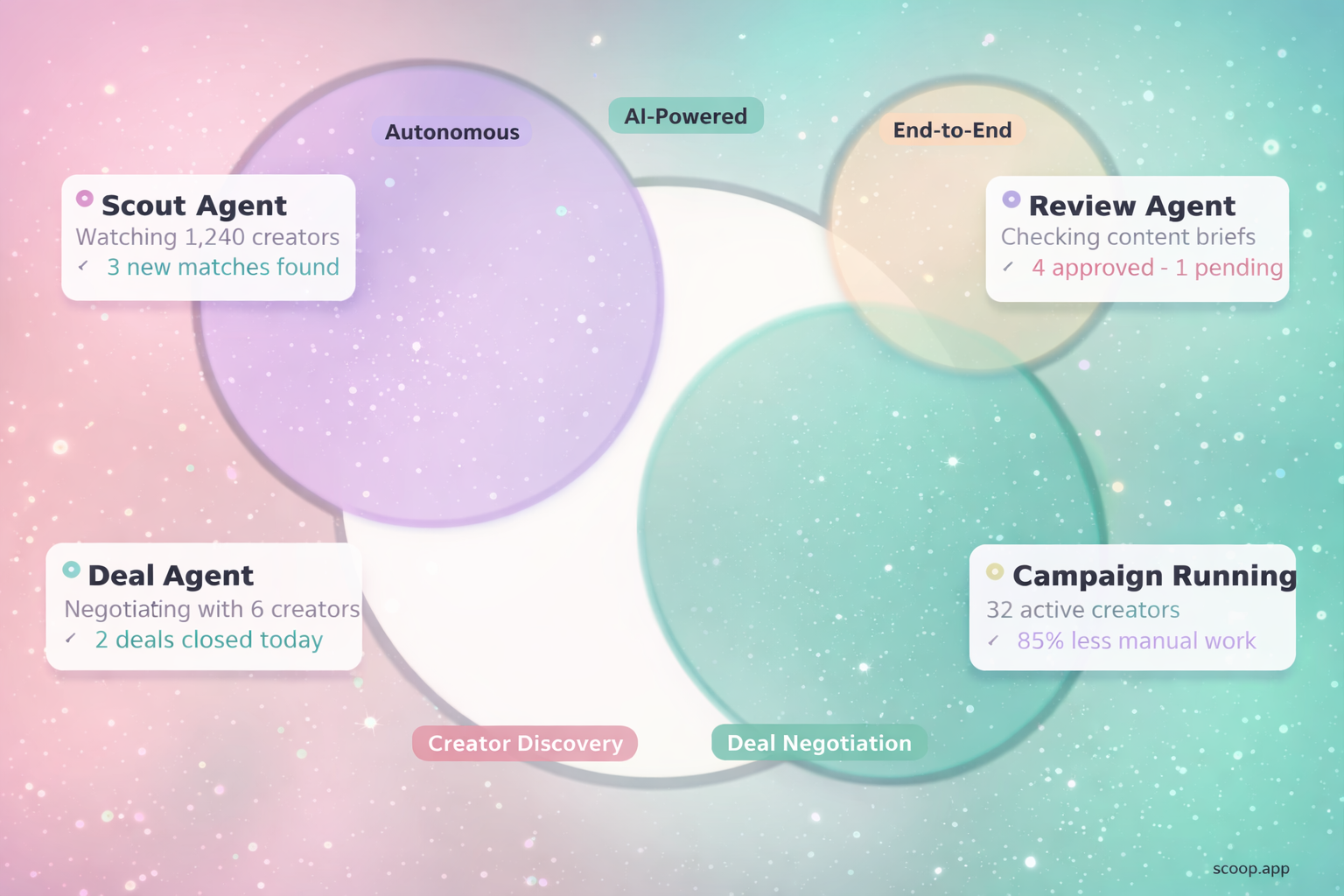
This is where platforms like Scoop (scoop.app) change the operational picture. Scoop uses autonomous AI agents to handle discovery, outreach, and content approvals — the most time-intensive parts of the UGC pipeline. Instead of managing each creator manually, brand teams review shortlists and approve content, while Scoop’s agents handle the coordination behind the scenes.
Using UGC in your broader creator program
UGC works best as part of a broader creator strategy, not as a standalone tactic.
The brands running the most effective UGC programs treat it as a content supply chain, not a campaign. Creators are sourced, briefed, and contracted on a rolling basis. Content is produced continuously. Usage rights are negotiated upfront. Performance is tracked and creators who produce strong content are brought back.
This is meaningfully different from the one-off campaign model most brands start with. In what experienced teams eventually learn about influencer marketing we discuss the shift from campaigns to ongoing programs is the single biggest unlock for brands trying to scale creator-driven growth.
Scoop (scoop.app) is built specifically for this model. Its agentic infrastructure, AI agents that handle discovery, deal negotiation, content review, and performance tracking is designed to run continuous creator programs without requiring a large team to manage the operational layer manually. Brands using Scoop report up to 85% reduction in the manual work required to run creator and UGC programs at scale.
Ready to see how Scoop automates your UGC and creator program? Scoop is the creator marketing platform built on autonomous AI agents - handling discovery, outreach, deal negotiation, content approvals, and performance tracking so your team focuses on strategy, not admin. Request a demo at scoop.app to see the full agentic workflow live.